Review of Tropical Malady (2004) by Robert B — 12 Jul 2012
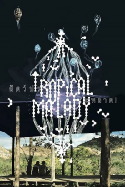
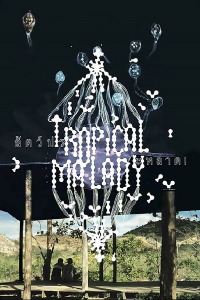
Sud Pralad (Apichatpong Weerasethakul, 2004).
Cahiers du Cinèma, one of the most respected film journals in the world, named Sud Pralad (literally Strange Beast, though released in the west as Tropical Malady) the best movie of 2004. I'm not so sure about that; 2004 was one of the strongest years for movies in quite a while. Spain gave us El Maquinista, Korea Sigaw, Thailand Shutter, Japan Ika Resuraa (okay, I just threw that one in to see if you were paying attention, but it's a darned good time) and Vital, Italy The Heart Is Deceitful Above All Things, Argentina The Motorcycle Diaries, Norway Nor Noise, Denmark The Green Butchers, England Shaun of the Dead, Germany Der Untergang (the movie pretty much everyone else said was the best of 2004), and I could keep going on all day. Even on Cahiers' home turf, we had Saint Ange, the first film from a young director named Pascal Laugier, who is quickly becoming the best of his generation. But if you're going to go for the willfully obscure, you could do a lot worse than to seek out Apichatpong Weerasethakul, an American-educated Thai filmmaker whose work is well-informed by the Surrealist movement of the thirties and the folktales of his home country. Of course, I'm writing this in 2011, and Weerasethakul is no longer a director about whom most people's knowledge doesn't even stretch as far as how to pronounce his name; Uncle Boonmee Who Can See His Past Lives, Weerasthakul's sixth feature, has been tearing up festivals, including winning the Palme d'Or at the 2010 Cannes Film Festival. Maybe he'll finally start getting the recognition he deserves. He should have a decade ago; The Mysterious Object at Noon, his first feature, is a jaw-dropping experience in folklore, the nature of documentary, and the kind of gorgeous cinematography that has pervaded his films ever since. (Uncle Boonmee won for Best Cinematgraphy at Dubai, by the way.) But back in 2004, no one knew who this guy was, and so Sud Pralad, like The Mysterious Object at Noon before it, was sadly neglected, and still is. You should rectify this, though this is not Weerasthakul's best work.
It starts off as a romance (if you passed over this when it popped up on Sundance because they labeled it a comedy, by the way, you can ignore that entirely) between Keng (Banlop Lonmoi in his only feature to date), a disaffected soldier, and Tong (Sakda Kaewbuadee, who has appeared in every feature Weerasthakul has made since this; in fact, he reprises his role as Tong in Uncle Boonmee), a young man from Keng's home village. The two of them are hesitant, and there's some difficulty since Keng is a naturally reticent type of guy, but romance blossoms. (There's a great, great scene in a cinema about halfway through the first part, the first scene in the film when we really get a sense that Keng is allowing himself to feel, that is in itself worth the price of admission.).
Halfway through the film, we find ourselves back in Weerasethakul's obsession with Thai folktales, as Tong's role is recast. Keng is still a soldier, but he is now attached to a jungle regiment on the lookout for a supernatural beast, a shaman who can take the form of a tiger. It's been abducting local wildlife and the odd farm animal here and there, presumably for food, throughout the first half of the film, but when it starts taking villagers, it's time for the army to act. We know the story has fundamentally changed, and that this is a beast, not a human, but Weerasethakul still gives us Tong. It's not exactly subtle, is it?
Not that it matters. The plot in a Weerasthakul film is always a secondary consideration; remember that he started out as a documentary, or at least a pseudo-documentary, filmmaker. He's more interested in the subjects he's exploring, be they people or folktales (and, like Errol Morris, he is also interested, maybe even more, in how the audience will react to them). He presents them beautifully, as is his wont, and through the wordlessness of the second half, which is presented with title cards, he draws our attention to the sounds of the forest, which are just slightly off, in keeping with the theme of the film's second half. That's the kind of attention to detail one should expect from a Weerasethakul film, and he delivers in spades.
On the other side of the coin, the film does have its weaknesses. Most notably is the transition between the first and second halves of the film, which is jarring in the extreme, and is the number one complaint about it both in the reviews I've read and on discussion boards. I do understand why Weerasethakul chose such a jarring segue, and it does make sense, but I wonder how much of the feeling of transition would have been lost had the two halves of the story been joined more smoothly. I've already mentioned the film's only other major flaw, which is its odd heavy-handedness, but that's minor in the bigger scheme of things.
If you're just discovering Weerasthakul, you have a wonderful journey in store. Start with The Mysterious Object at Noon and come to this one a little afterwards. ****.
This review of Tropical Malady (2004) was written by Robert B on 12 Jul 2012.
Tropical Malady has generally received positive reviews.
Was this review helpful?