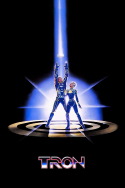
Review of Tron (1982) by Pieter V — 22 Apr 2011
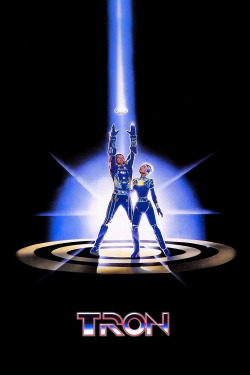
I recently took another look at TRON in preparation for the Blu-ray release of Tron Legacy and was reminded of how spectacular the film was (in context with the time of its release).
Ok I admit I've probably over-rated this film by giving it five stars but that's mostly due to the nostalgia factor. I first saw Tron as a wide-eyed movie loving kid and was blown away by it but for all those who weren't around or weren't old enough to see Tron at the cinema in 1982 subtract a star or two and you'll get a more accurate rating of the film minus the nostalgia and visual effects bias. My bias doesn't just date back to my childhood though, I started working in the film industry in the late 80's right at the cusp of the CGI revolution and bore witness the end of those pioneering days so I'm probably in a better position to appreciate the technical achievements of the films of that period such as Tron and The Last Starfighter (the first live action film credited to incorporate fully digital models) than most.
Tron is certainly not a perfect film but in my opinion it broke far more ground in visual effects in a single leap than virtually anything released since and is more than deserving of its cult status. It was the first film to feature CGI as both fully rendered scenes and as replacement backgrounds. It took rotoscoping, compositing and backlighting techniques to a whole new level to create images the likes of which no one had ever seen before or really since for that matter, because no one would attempt this level of visual complexity again until digital technology became the norm. The sound effects and scoring of the film also deserve noting for the atmosphere they added to the visuals and how they helped to hide some of the rendering errors.
Story wise the idea behind Tron was also rather ahead of its time, it's kind of like the grandfather to The Matrix with its concept of a digital future, how computers would not only become an integral part of our lives but may eventually run our lives or even turn against us. It was certainly very interesting to revisit these ideas through the eyes of the 80's filmmaker in 2011. In truth though the story takes a backseat to the visuals but I still believe the concept and world created for Tron is vastly underrated.
In simplistic terms the world of Tron, known as the mainframe, is a digital space inhabited by anthropomorphised computer programs created by a large software company called ENCOM. The mainframe is ruled by a master computer program called the MCP that controls the digital realm like an evil dictator, absorbing other computer programs in order to enhance its power and knowledge so that it can one day rule the real world as well. Any program the MCP feels is either useless or a potential threat is placed on 'the grid' to battle to the death in computer games played by humans. It's important to remember that computer games and games arcades were just becoming very popular at the time (you can see a nod to Pac-man in one of the background images). When ex ENCOM employee and computer game creator Kevin Flynn (Jeff Bridges) is digitized into the mainframe by the MCP he becomes the first human, or user as we are known to the programs, to enter the computer world and is forced to battle to the death as an arcade game himself. He teams up with a few other rebellious programs including the hero of the resistance, Tron, and together they battle to overthrow the evil MCP.
It was interesting to re-watch the film as an adult and note some of the themes that were overlooked as a kid. The ever popular 'evil corporation vying for world domination' story line was present but it was the computer program designed by the company that was the real villain of this piece and would eventually turn on its human creators (a story line that would be given a new twist two years later with James Cameron's The Terminator).
Also much like The Matrix, there were religious themes embedded throughout the movie and it's a subject that is carried over into the 2010 sequel. The computer programs in the main frame consider the humans that created them to be all powerful god-like beings that will one day save them from the MCP. Part of the MCP's plan is to destroy the myth of users as gods and the punishment for any program being a 'believer' of the users is death (known as de-rezing in the digital world) though the idea of an after life is never explored. Naturally when a human 'user' (Bridges) enters the digital world he is seen a a sign of hope by the resistance programs, (much like the arrival of Neo was in the Matrix). The MCP's plan is to force Flynn to fight in the games knowing that his death would destroy the morale and hopes of the other programs.
You can read what you like into the film's plot but I personally see these themes as mere story tools rather than messages intended to provoke deep thoughts about corporate corruption, dependance on technology or religious views, though the inclusion of such themes does add an extra level or two to what is essentially a visual effects action flick.
The trouble with being cutting edge, whether it's in technology, fashion, music or film is that the more cutting edge your work is the more it will probably date and Tron is no exception. The computer graphics are almost laughable by today's standards but that is also part of their charm. Tron is a window into the technology of the past but put into context it is nothing short of mind-blowing. Tron is a thoroughly enjoyable ride and a must see for anyone who is a lover of film and film history (or anyone who just wants to see The Dude as a futuristic action hero :) I would also strongly suggest revisiting the original before viewing the sequel if you want to get the most out of it.
This review of Tron (1982) was written by Pieter V on 22 Apr 2011.
Tron has generally received positive reviews.
Was this review helpful?