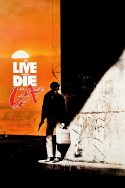
Review of To Live and Die in L.A. (1985) by Lloydpictures — 03 Feb 2019
To Live and Die in LA or Miami Vice: L.A. Vacation? (If you asked Michael Mann for title ideas at least). The feature film before the 2006.. feature film. No, i’m not here to talk about that. But you can’t allude to the great Miami Vice (referring to the original series now - this is getting confusing) without mentioning the incredible and distinctive music. Every time I watch To Live and Die in LA i’m hit with that same feeling. Wang Chung did just as sterling a service to this film as Jan Hammer did in Miami Vice. I’ve watched To Live and Die in LA too many times. My 'too young to watch this stuff' son loves it too. He calls it 'car movie' on account of the very long, fast paced and thrilling car chase scene towards the end of the film.
The year was 1985. It was a good year for action movies. Rambo Part II; A View to a Kill; Commando and Rocky IV to name a few. I discovered all of these gratefully some years later. At this point in time I was too young even for the Goonies or National Lampoon’s European Vacation, further ’85 classics. While we’re in this year, how great of a western is Pale Rider? Preacher, played by Clint Eastwood, mysteriously arrives in a dusty, prospecting town and sorts out a greedy mining company owner terrorising the local, less fortunate residents. I’ll save the rest for a future review.
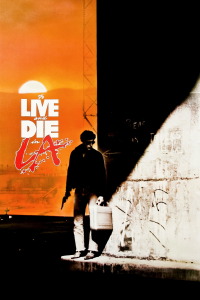
To Live and Die in LA. Enter Reckless U.S. Secret Service agent Richard Chance, played exceptionally by William Petersen. He follows the rules until the rules don’t work anymore, then he.. no strictly speaking that’s Clint Eastwood’s Dirty Harry. Its the same kind of deal though and equally as effective here. Trying to get the bad guy, black Ferrari driving, money forging extraordinaire Ric Masters becomes an unhealthy obsession for Chance. This is not without reason. Masters was responsible for his first partner, Jimmy Hart’s death. A death made all the more tragic because in true Hollywood fashion the guy was like three days from retirement, man.
Strait-laced, John Vukovich ventures Into The Abyss created with Hart’s passing. Vukovich believes in following orders and doing things by the book. The end of the film has you asking if this is how Chance started out. But the job changed him. It made him hard. The stage is set.
You may be thinking this sounds like Lethal Weapon. It’s not. This is no comedy. The mismatched, buddy cop theme is present but feels original, such is the dark tone throughout. Don’t be fooled by the colourful opening titles and synthesised music. Whenever I see Willem Dafoe in a film, I immediately think of Ric Masters demanding “I want my paper”, then annoy the people around me by saying it too frequently. The hero is only as good as his or her villainous counterpart. Mr Dafoe was perfect in this role, his character, a complicated mix of usually opposing traits. Articulate, professional and exacting, but in equal measure a fickle, temperamental and reckless artist. His criminal activities allow a privileged existence including a mansion in BelAir and bisexual companion Bianca, herself a performance artist. He routinely burns his paintings - paintings actually created for the film by german artist Rainer Fetting. No reason is given but we see him derive some pleasure from it. This is at odds with the long montage during the opening credits, casting light on the complicated process of counterfeiting money, an operation that Masters is clearly adept.
Chance plays a high risk game and takes Vukovich reluctantly along for the ride, doing anything to get closer to Masters and his operation. Ultimately Chance pays an unexpected and anti-climatic - but so realistic, #authentic?- price. After a moment of disbelief, Vukovich sheds his earlier vulnerabilities, chiefly his blind adherence to the rules and becomes a reflection of Chance’s - ends justify the means - character. Enter his best line “You’re working for me now.” Cue music. If you’re familiar with Hugh Holland’s photography of skateboarders in the seventies you’ll appreciate the warm colours the smog creates when the sun's low in this film. The colour palette is outstanding. The hazy exterior shots contrast beautifully with the moody and so eighties ambience of internal scenes. Strong greens and reds dominate in nightclub scenes and pervading cool blue light takes over in the common apartment setting.
William Friedkin directs. Popular opinion specifies 1971’s The French Connection as his most notable work. But I prefer what he does here.
This review of To Live and Die in L.A. (1985) was written by Lloydpictures on 03 Feb 2019.
To Live and Die in L.A. has generally received very positive reviews.
Was this review helpful?