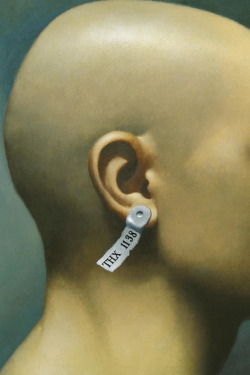
Review of THX 1138 (1971) by Marrick A — 09 Jun 2012
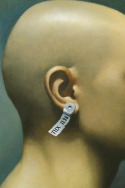
But Why Are They All Bald?
Look, I get just as tired as the next person of summing up the problems with the films of this era as "drugs." It isn't even strictly fair. I have no evidence that George Lucas ever actually used drugs. It's also true that it doesn't require drugs to have loopy ideas and make weird films. (A Disney animator speaking of [i]Fantasia[/i] said that, yes, he used drugs--aspirin and Pepto-Bismol.) However, 1971 is smack in the middle of the era wherein using drugs to heighten your artistic expression was not merely socially acceptable but somehow expected. In certain social circles, it is still believed that you aren't truly making art if you're sober, that you require having your mind altered. There were a lot more of those social circles forty years ago. So okay, maybe the lunacy of this film is not all about drugs. However, it's understandable that it's the first assumption.
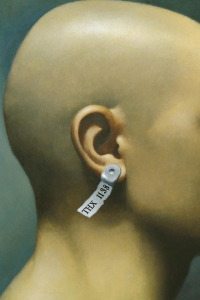
Explaining the plot of this will take some doing, but we'll give it a try. This is a distant, post-apocalyptic future, as was the fashion at the time. In this world, drugs are actually literally required, not just socially expected. Moods are controlled through legally mandated drug usage, and human emotions are discouraged. You are also encouraged to turn in anyone you don't think is using their drugs. A man given the designation THX 1138 (Robert Duvall) has been assigned the roommate LUH 3417 (Maggie McOmie). She works for SEN 5421 (Donald Pleasence). One day, she goes off her drugs. She then replaces THX's drugs for placebos, and he begins to feel his own emotions. He and LUH develop a sexual relationship and fall in love. But SEN wants THX for his own roommate, for reasons I'm not clear on, and the people who run things discover that THX is not on his medication. THX decides that the only way to truly be himself is to escape the underground habitat and reach the surface, even if the radiation kills him.
To be perfectly honest, while watching, I just assumed that SEN would turn out to be the villain, because he was played by Donald Pleasence. Ever since I was a child, I've just automatically assumed that he would be the villain every time. This is no more entirely fair than the assumption that all movies of this ilk are what they are because of drugs--or that Robert Mitchum is always the villain, which is another leftover childhood assumption. (And one that makes even less sense, given that the Mitchum film I've seen the most is [i]El Dorado[/i], where he's a hero, whereas I mostly knew Donald Pleasence from [i]Escape to Witch Mountain[/i].) In some ways, typecasting seems to me to be more the sign of a lazy filmmaker than a lazy actor. A lazy actor shows when they appear as their usual character while playing something else; a lazy filmmaker assumes that casting that person will be all it will take to get character development across. I think they're about equally frequent.
I think one of the problems here is that science fiction has traditionally been an isolated genre. To this very day, there's something somehow less important about science fiction. It's generally considered less likely to be "literature." This seems to have the result that it attracts a lot of people who do not necessarily think the way other people think. Often, there turns out to be a reason for that. Oh, I know--ninety percent of everything is crap. Yes, it is. I don't dispute that. However, it often seems as though most of the best-known science fiction is either blockbuster or pretentious, and that there isn't much middle ground. And I think that's because science fiction is all about thinking about ways the world [i]isn't[/i], and it doesn't necessarily require thinking about how the world could be that way. So if you are the kind of person who thinks the details are for other people, I believe writing a certain variety of science fiction would appeal to you.
Okay, I don't know which version of the movie this is. The box probably says; since I got it on DVD, I probably got the remastered, updated version. That seems right. But I didn't notice a whole heck of a lot that didn't seem perfectly possible in the '70s. There's holographic entertainment, but the hologram doesn't look more advanced than Princess Leia in [i]Star Wars[/i]. And, yes, it's the same old '70s science fiction dystopia set--sort of. It is, in fact, an unfinished section of San Francisco's BART system and a telephone exchange, among other places. For some reason, in this era, there was an assumption that the future would involve a lot of brushed concrete and exposed electronic equipment. Really, I thought the whole thing had a confusing plot and a bland visual style. The more I look at his work, the more I wonder why anyone would have thought that George Lucas had the potential for greatness in him. Unfortunately, he seems to have believed his own press, too.
This review of THX 1138 (1971) was written by Marrick A on 09 Jun 2012.
THX 1138 has generally received positive reviews.
Was this review helpful?