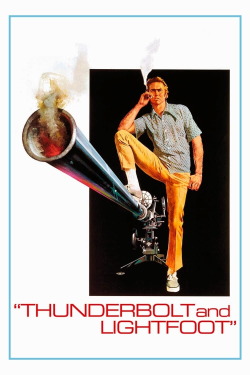
Review of Thunderbolt and Lightfoot (1974) by Harry W — 28 Feb 2016
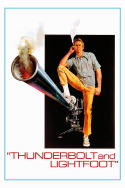
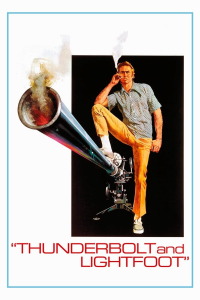
Pinning Clint Eastwood and Jeff Bridges together under the directorial work of Michael Cimino, Thunderbolt and Lightfoot offered too much talent to ignore.
From before Michael Cimino's career highlight with The Deer Hunter (1978) and the catastrophic failure of Heaven's Gate (1980), the man took control of Thunderbolt and Lightfoot. Being his first feature-length film, you can see so much of director's brilliance beginning to take place in the form of a Clint Eastwood vehicle. Under his guidance, Thunderbolt and Lightfoot pushes to be so much more than the standard action fare and manages to capture it with brilliance.
Thunderbolt and Lightfoot is unforgettable all thanks to the contrast between its main characters. There's a nice contrast between the hard-edged and gritty nature of Clint Eastwood and the gleefully extroverted spirit of Jeff Bridges, and this matches the entire mood of the feature. Thunderbolt and Lightfoot manages to maintain both edgy drama and lighthearted comedy to keep the experience watchable. The former dominates enough to define the film as a crime thriller, but it is one set against the backdrop of anti-establishment themes popular in the 1970's. As a result, the protagonists are thieves on an endless road trip whose antics build up the story while adding occasional humour to the film, adding a rich tone to the feature. It's the humour in the film which makes it stand out among the countless other Clint Eastwood vehicles of the era, as well as the feeling of genuine drama and brotherhood that reflects the counterculture classic Easy Rider (1969) and the Oscar-winning Midnight Cowboy (1969). This reveals that there is a lot of heart in Thunderbolt and Lightfoot amid all the action and comedy, so it is a brilliantly written film.
The story itself is a simple and straightforward one supported by its context, themes and characters. Thunderbolt and Lightfoot kicks its story off immediately. Instantly characterizing its protagonists as being on the other side of the law, the story progressively tells more about its characters as the bond between Thunderbolt and Lightfoot begins to develop. However, it is still prone to dragging on at times. After the fast-paced start of Thunderbolt and Lightfoot, the pacing takes a downturn. During the time leading up to the climactic heist, the characters work on plotting out their steps and raising the funds to accomplish their mission which takes a lot of time to do and doesn't have the same fast comic banter which bolstered the preceding scenes. This mainly happens after Thunderbolt and Lightfoot team up with Red Leary and Eddie Goody. The addition of these characters gets in the way of the brotherhood shared by Thunderbolt and Lightfoot and reduce the level of characterization that can be explored during these scenes due to a larger number of characters needing screen time. There is still some moments of humour along the way, but it lacks the same comic timing. Still, after the dull nature of this second act the film returns to form with a powerful climax.
The third act of Thunderbolt and Lightfoot capitalizes on everything the film has been building towards. With a rich atmosphere of tension built out of an increased pace and powerful sound editing, Thunderbolt and Lightfoot hits viewers hard with a climax packed with strong action. The action scenes in Thunderbolt and Lightfoot are never relied on to carry the story, they simply make themselves present out of necessity and reveal Michael Cimino's capabilities in capturing them all.
Even when Thunderbolt and Lightfoot is not in a mad rush of action it carries atmosphere with brilliance. This is largely because of the scenery and lack of a soundtrack. Coming from a disillusioned time in America, Thunderbolt and Lightfoot is a film which reflect the emptiness that once was the American dream through clever filmmaking. The empty and dry scenery reflects the western nature of the film, yet not a patriotic western. The lack of music helps this due to reinforcing the feeling of emptiness.
And to top it all off, Thunderbolt and Lightfoot benefits from some astounding work from its cast.
Clint Eastwood's leading effort is a solid one. Relaying his stereotypical hard-edged persona to audiences, Clint Eastwood's performance in Thunderbolt and Lightfoot stands out among his countless other efforts due to a restrained sense of vulnerability in the role. There is nothing stopping him from being a badass, but Thunderbolt and Lightfoot puts more characterization into his presence and encourages audiences to consider what made him this way in the first place. As he develops a chemistry with Jeff Bridges you can see him getting more energetic in the part without pushing beyond his gritty attitude. There is more life in his performance and more heart, a feeling which is conveyed in a very subtle fashion. There is always a sense of regret in Clint Eastwood, a feeling like he is doing what he genuinely needs to rather than what he believes is right. It hints at a sense of disillusionment with the world around him, reflecting the aforementioned elements of counterculture. Clint Eastwood branches out in Thunderbolt and Lightfoot, though he still carries enough of his natural attitude to appeal to fans of his. As a man of action and a genuine actor in Thunderbolt and Lightfoot, Clint Eastwood delivers one of his finest performances from his early days.
But anyone can tell you it is Jeff Bridges that stands out in Thunderbolt and Lightfoot. Capturing the spirit of young America with his performance, Jeff Bridges puts a quick-witted and passionate spirit into Lightfoot. He is the main source of the humour in the film because his attitude is endlessly fun, yet it does not get in the way of the real drama in the film. Jeff Bridges captures the intense moments of the drama without problem due to his own flair for atmospheric tenacity, yet his ability to oscillate between it and the comic nature of the film with such ease is magnificent. Every moment Jeff Bridges is on screen is a chance for him to give life to audiences, and he does it with such a natural passion that it enrichens the entire feature. His chemistry with Clint Eastwood is magnificent because the two work together both as brothers yet each represents a different side of American life, with Lightfoot becoming a thief out of desire more than requirement. He clearly has a lot of fun in the role, and he does it with brilliant physical energy and strong insight which renders his performance unforgettable. Jeff Bridges' Academy Award nominated effort in Thunderbolt and Lightfoot is truly admirable, worth nothing short of its acclaim.
George Kennedy is also great. Moving from hero to villain after winning an Academy Award for portraying prisoner Dragline in the prison masterpiece Cool Hand Luke (1967), George Kennedy's performance in that helps to bolster his achievement in Thunderbolt and Lightfoot. Portraying an angry man who is almost obsessed with hatred, George Kennedy's raw anger in Thunderbolt and Lightfoot is extremely intimidating. He is unpredictable and rich with antagonism as a result, making an engaging screen presence and a powerful foe for the heroes of the story. George Kennedy is remarkable in Thunderbolt and Lightfoot, and his chemistry with Clint Eastwood is excellent.
And though Geoffrey Lewis has a rather simplistic character to work with, he still puts his natural charm into the part.
Thunderbolt and Lightfoot may not always have the best consistency with pacing, but with Michael Cimino's passionate direction, it transcends the standard of depth for Clint Eastwood vehicles with rich themes, a strong style and a notorious edge for comedy brought in by Jeff Bridges' excellent performance.
This review of Thunderbolt and Lightfoot (1974) was written by Harry W on 28 Feb 2016.
Thunderbolt and Lightfoot has generally received positive reviews.
Was this review helpful?