Review of The Witch (2016) by Jack F — 20 Jun 2016
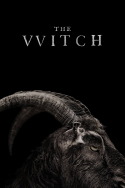
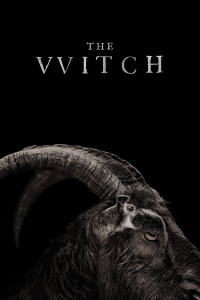
Newcomer Robert Eggers' "The Witch" is a great example of just how effective the "slow burn" approach to horror can be when it's properly utilized. Here is a film that develops slowly, taking its time establishing its characters and surroundings. It has no need for jump-scares and "gotcha!" moments; it's not that kind of horror movie. Eggers is more interested in mood and atmosphere, gradually building up feelings of unease in his audience. Like Hitchcock or Carpenter (when he's on his A-game), he prefers to linger on suspense rather than straight-up action-based horror. There are visual frights in "The Witch," but Eggers also relies on the age-old notion that what we don't see is often scarier than what we do. True terror is often implied.
With "The Witch," Eggers doesn't so much induce fear as cultivate it. He starts by planting the seeds of dread, which gradually blossom into mounting tension and horror as the movie goes on. In many instances, it feels like the characters are the audiences' surrogates; they begin confused and bewildered, but as time goes on, this gives way to genuine fear. This is likely not going to sit well with many modern-day horror audiences, who won't have the patience for the film's deliberate approach. Make no mistake, the film is slow-moving, and that's not meant to be a criticism. It's sorta the point. And don't confuse "slow-moving" with "boring.".
Set in New England in the the 17th Century, the movie revolves around a Puritan family that is ostracized from their community. They set out on their own and build a small farm on the outskirts of a large, foreboding forest, which is already a bad idea in and of itself. The family consists of stern patriarch William (Ralph Ineson), his stubborn wife Katherine (Kate Dickie), and their five children: teenaged Thomasin (Anya Taylor-Joy) who, along with her younger brother Caleb (Harvey Scrimshaw), serve as watchdogs to the youngest siblings, rambunctious twins Mercy and Jonas and infant Samuel.
From the get-go, the family begins to experience problems. The crops begin to wither. The animals act strangely. And in the most disturbing development, the baby Samuel is snatched from right under Thomasin's nose, and I mean that literally. She covers her eyes for about two seconds while playing peek-a-boo, and in that brief instant, the child disappears. The discomfort and unease soon turns to paranoia; while searching for the child, Caleb gets lost in the woods, and when he returns...well, I don't really want to say. The twins claim they've had contact with a witch in the woods, and suspicion soon turns to Thomasin, whom the family begin to suspect may be involved in all the ghastly-goings on...if not outright responsible herself.
It's a simple story, but it's well-told and enhanced greatly by the filmmakers' efforts. Cinematographer Jarin Blaschke has shot the film in drab, muted colors, mostly grays and browns, and there's almost no sunlight whatsoever. It's as if the family's location is forever ensconced in an overcast sky, and the absence of bright beams of sunshine adds to the feelings of isolation and hopelessness permeating throughout the film. The understated score, by Mark Korven, also helps contribute to the unsettling mood.
The only real issue I have with the film is admittedly kind of a big one, but it's also a bit unavoidable, given its setting, and that is that the characters naturally all talk in Puritan-speak, with a lot of "thous" and "thys" and such. This, combined with the English accents (and, in the case of William, actor Ralph Ineson's raspy voice) makes some of the dialogue damn near unintelligible. This is a movie in which I sorely wish I had the option to put on the subtitles, as I just had a real hard time understanding the characters at certain times. Now it's not ENTIRELY vital, as I was able to glean enough of what they were saying in most cases, and most of the movie's essence is based on its ominous visuals anyway. But even so, there were a few instances in which entire sentences were lost upon me.
But even with that hiccup, this is a creepy, creepy film; you can never have too much atmosphere in the horror genre, and "The Witch" has that in spades. There's even some commentary on the infamous Salem Witch Trials (which would not have occurred yet in the movie's time), particularly when it comes to poor Thomasin. Eggers has reportedly been tapped to direct a remake of the silent horror classic "Nosferatu" and based on his work here, I'd say he's well-suited for the task.
This review of The Witch (2016) was written by Jack F on 20 Jun 2016.
The Witch has generally received positive reviews.
Was this review helpful?