Review of The Wild Bunch (1969) by Andrew J — 18 Aug 2018
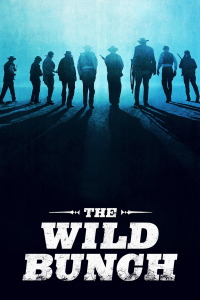
Sam Peckinpah's brilliant revisionist western is as genuine cinematic masterpiece. William Holden leads a gang of aging outlaws in the waining days of the old west before it became civilized. After a failed bank robbery that ended up an ambush by railroad-hired bounty hunters, the bunch are chased down into Mexico where they strike a deal with a corrupt general to steal guns for him to fight Villa.
The story may not sound all that great, but Peckinpah and co-writer Walon Green fill the film with rich characterizations, stunning visuals, and a surprising amount of melancholy for a film that's otherwise dominated by a tidal wave of male machismo (which borders on misogyny).
It's intimidating to write about a film that's already been dissected by an endless number of film scholars, so responding more on a personal level to the film, the themes around the bunch being men-out-of-time is the one that most grabbed me.
Holden as Pike Bishop (a great character name!) is smarter, tougher, and in general more worthy than the soft citified civilians around him. Ernest Borgnine as Dutch Engstrom, I believe represents the conscience of the bunch.
He's the one who at different times refocuses the group when they begin squabbling, and gets the group to do the right thing. Most of the arguments seem to happen between Pike and the Gorch brothers, played legendary actors Warren Oates and Ben Johnson.
Jaime Sánchez rounds out the group as Angel, a Mexican who's heavily conflicted about stealing guns for a general oppressing his own people. There's also Edmond O'Brien as Old Man Sykes, who now just watches the horses and still gets a share because he used to run with the gang.
He's the character who the rest of the aging bunch will likely become, except that there's no new gangs for these old timers to to watch their horses. North of the border, the world is now filled with motor cars, railroad barons, and Temperance Unions wanting to "civilize" the west.
When the debauched General Mapache (SPOILER ALERT!) finds out that Angel took a case of the stolen guns to give to Villa's freedom fighters, the bunch reluctantly hands Angel over to the general. It's this crisis of conscience for the group when they wordlessly reflect, staring at one another, hungover in a brothel, and Pike says, "Let's go" the gang knows exactly what they need to do.
The moment recalls an early scene in the film when Pike lectures the group, "We're gonna stick together, just like it used to be! When you side with a man, you stay with him! And if you can't do that, you're like some animal, you're finished! We're finished! All of us!" Borgnine, as the conscience of the group is not in the brothel but sitting outside whittling, immediately joins the others as they walk to their horses to retrieve their guns and proceed on their long walk to confront the general to get Angel back.
That walk of the four, Holden, Oats, Johnson, and Borgnine, is an iconic piece of film history that has been endlessly imitated, from obvious allusions such as the Gunfight at the OK Coral scene in "Tombstone" to the less obvious scenes like Jan-Michael Vincent and his crew going out to catch one last wave together in John Milius' surfing classic "The Big Wednesday" or even in the Kathryn Bigelow's cult vampire film "Near Dark.
" This scene culminates in an earlier foreshadowed scene during the opening credits when a group of children are shown giggling and gleefully watching scorpions fighting off a swarm of much smaller but innumerable number of ants.
The obvious connection is the these stronger, better men are being crushed and run off by the overwhelming number of weaker, dishonest, "civilized" folk changing the face of the frontier. These themes of men who've lived past their time is one that has always fascinated me, no matter the time period.
Peckinpah explored slimier themes in his excellent film "Ride the High Country," but he take these notions to a next level of filmmaking with his masterful direction, which was hugely influential on modern day action cinema.
Without Sam Peckinpah, there never would have been a John Woo or a Quentin Tarantino. With the exception of Akira Kurosawa, violence in cinema was never as artful or presented as a of beauty. The action sequences in the film were often described as bullet ballets, which is a perfect description of the opening and closing gunfights in the film.
The interesting balance of the film's depiction of violence is that while it's at once brutally violent (the film was giving an NC-17 rating for it's 1993 re-release), Peckinpah's shoots the scene in such as way, particularly his use of slow motion and cross cutting between action, which was something virtually unseen in cinema outside of Kurosawa, and Peckinpah arguably brings it to the next level with "The Wild Bunch.
" I haven't even mentioned Robert Ryan's character, who used to run with the bunch, but who's been forced to lead the group of railroad bounty hunters to kill his old friends. He's a scorpion laid low, now forced to side with the unworthy ants.
Ryan's character lashes out his worthless rabble (primarily embodies in wonderfully scuzzy performances by L.Q. Jones and Strother Martin) saying, "They know what this is all about - and what do I have? Nothin' but you egg-suckin', chicken stealing gutter trash with not even sixty rounds between you.
We're after men - and I wish to God I was with them. The next time you make a mistake, I'm going to ride off and let you die." His character is rather heartbreaking, especially at the end of the film when he finds his former compatriots all dead and decides to ride off with O'Brien, the only surviving member of the bunch, who tells Ryan he's going to fight with the Mexican rebels, saying "Well, me and the boys got some work to do.
You want to come with us? It ain't like it used to be, but it'll do." Peckinpah sees these men as Titans amongst mere mortals. They represent the stronger, loyal, better part of mankind that's being eaten away at by a greedy, petty, and unworthy onslaught of "civilized" folk.
Whether you agree with those sentiments is one thing, but when it comes to storytelling, it's one that I've always found highly compelling. I also haven't even mentioned the gorgeous photography by Lucien Ballard and the hauntingly melancholy score by Jerry Fielding, in what is likely best composition of his career.
There's also memorable supporting performances by Bo Hopkins, Dub Taylor, and Alfonso Arau. Overall, "The Wild Bunch" is a film that both on a straight entertainment level (it's one of my desert island films) and on an intellectual level, which is why the "The Wild Bunch" stands as one of the great masterpieces of cinema.
This review of The Wild Bunch (1969) was written by Andrew J on 18 Aug 2018.
The Wild Bunch has generally received very positive reviews.
Was this review helpful?