Review of The Virgin Suicides (2000) by Blake P — 30 Mar 2015
I've always told friends of mine that my dream girl would be a combination of Jennifer Lawrence, Emma Stone, Liz Phair, and PJ Harvey, a sort of 1990s alt-rock hellion/cool actress who also has a slick sense of humor. It's all fantasy, sure - no one on the face of the Earth probably has all the qualities I like most about these women - but everyone, young or old, is guilty of materializing love, romance, lust, whatever you may call it. One can only imagine all the '70s era teenage dudes who saw that infamous Farrah Fawcett poster and thought "I want a girl like that", and one can only imagine the present-day tween girls who are still sobbing over the fact that their ideal husband, that black haired smolderer from One Direction, has left the boy band in favor of a normal life. Everyone knows they can't always have who they want, but why not obsess over the things you can't and never will have? In some ways, desire is even more dangerous than contentment; contentment is temporary, while desire can last for ages, forever.
Upon the released of "The Virgin Suicides" in 2000, critics and audiences were perplexed as to why all the Lisbon daughters (expect for the subtly tortured Cecilia) all killed themselves on the same day. Was it the fault of their overprotective parents? The boys who looked at them as objects rather than people? Their deaths cannot be looked at too analytically because the film is far too cryptic to give too much away. "The Virgin Suicides", however, is not cryptic when displaying what these girls represent: the childhood crushes you never made it with/understood/got to know, the idealism of sex in a pre-sex world, the fantasies you made better in your head but ignored in the scheme of reality. The deaths are not just tragic; they also act as the demise of idealism. What happens when you step out from the shadows and realize that a golden-haired Lisbon girl or a Jennifer Lawrence/Emma Stone/Liz Phair/PJ Harvey combination do not and will not exist anywhere other than in your dreams? The film marks the beginning of that awkward period in which you begin to shed the wool skins of rose-colored childhood and try-on the brutal truths of adulthood.
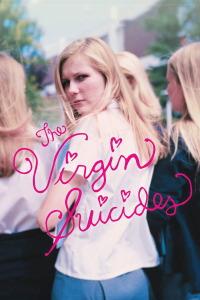
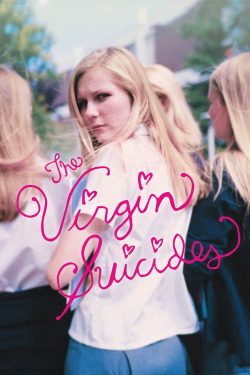
The Lisbon family appears to be a healthy, picture perfect rendering of the American family. Father (James Woods) is a well-liked math teacher at the local high school. Mother (Kathleen Turner) is a doting housewife. Their beautiful daughters, Lux (Kirsten Dunst), Cecilia (Hanna Hall), Bonnie (Chelse Swain), Mary (A.J. Cook), and Therese (Leslie Hayman), are pretty in the most untouchable of ways. The neighborhood boys are fascinated by them. Neighborhood girls want to look like them, to be them. But after Cecilia attempts suicide, the pleasant landscape begins to fade. Father is unhappy, passive, almost a ghost. Mother is overly possessive, forcing her daughters to dress in modest clothes, punishing them with isolation in retaliation for the slightest mistake. But then Cecilia goes through with her suicidal intent. Lux has sex for the first time. The boys become even more intrigued. In response, the Lisbon parents keep their daughters in such confinement that most would accuse them of abuse. Then, they all kill themselves at the same time. The end.
Or is it? The lives of the Lisbon girls were short and enigmatic, but their porcelain beauty haunts the pubescent boys who lingered over them for so many lusty months. The guy who took Lux's virginity (Josh Harnett) abandoned her that very same night - a sickening move, considering the location (a football field) - but in retrospect, he talks about her like she was his true love, unmatched by any other. The narrator is plagued with the confusion surrounding their deaths, as if he can't understand why the Farrah Fawcett poster on his wall would suddenly leave him alone to experience the real world. The combination of the loss of innocence and such a traumatic event leaves them stunted, trapped in sweatiness of their younger days.
The remarkable restraint of "The Virgin Suicides" is what makes it such an exceptionally eerie piece. The directorial debut of Sofia Coppola, who has gone on to make other masterpieces in understatement, such as "Lost in Translation" and "Somewhere", is photographed with an unsettlingly warm sepia lens and finds its music in period songs that don't quite fit, making for a soundtrack that obviously uses tunefulness to hide a souring inside. What Coppola has done here is remarkable: She creates a conceptual (almost plastic) world but finds the truth in it by keeping things on such a low note. As viewers, we always feel like we're being kept out of something, only heightening the swirling mist of mystery the film initially promises.
Sometimes "The Virgin Suicides" is just too restrained for my tastes, but it doesn't make the film any less mesmerizing. It projects a depressingly comedic but affectingly melancholy aura that leaves a lasting, dreamily nightmarish impression.
This review of The Virgin Suicides (2000) was written by Blake P on 30 Mar 2015.
The Virgin Suicides has generally received very positive reviews.
Was this review helpful?