Review of The Umbrellas of Cherbourg (1964) by Tim H — 10 Jun 2008
I may be the first guy in history to review Rocky IV and The Umbrellas of Chebourg back-to-back.
I didn't know much about this movie until I saw Be Kind Rewind. As much as I know about cinema (at least, I think I do), this movie always fell under the radar. Then I found out that it was one of my co-worker's favorite films and that it was in the controversially (I just discovered this!) respected 501 Must See Movies. It really is pretty fantastic, but I didn't know that it was an operetta.
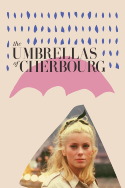
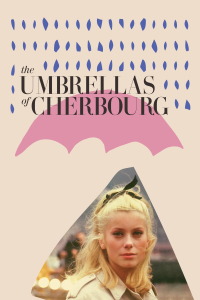
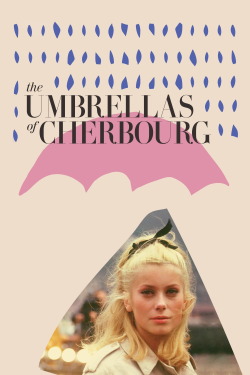
My biggest draw to this movie is the color pallate. It's a marvelous use of surreal, obviously setlike design to compliment this story. It really is like sitting through a painting full of moving pastels. These colors don't just operate on their own. The music pushes the colors. I will get to the story in a second, but you almost have to treat this movie like a theatrical piece. The music and the movement are just perfect for one another. As dark as the movie gets at times (in terms of hopelessness, not necessarily introverted), the colors are always present. Even at the end in the winter, the white is always presented with something breaking up the image, creating a striking pallatte that is playful, yet honest.
The story itself is nothing necessarily new. But it really is a strong and powerful romance. There are a few romances in popular culture and literature that stand out and are timeless. This might be one of those. Unfortunately for the couple but fortunately for the story, the couple does not work out and life hands them a quasi-tragic end. But the performances going into this movie are just second-to-none and are acted fabulously despite the oddities that comes with constantly acting through song.
The music is gorgeous, as I stated earlier, but there's an interesting aspect to it. It's not like traditional musicals that use clever lyrics and different meter to tell the story. The dialogue is very realistic. The only weird part about it is that it is sung. That operretic format is sustained throughout the story and the use of movement, while exaggerated, is kept somewhat close to the vest. Really, the only thing that makes this different than most other French love stories is that it is set to music. This story could be told line-for-line once again, just without the orchestral scoring and the story would have been entirely differnet. That music is a choice. It's a very repetetive theme and doesn't stray into bombastic vocalizing, but rather ranges from midtones to whispers. There is no audience, despite the setlike design mentioned earlier and it almost feels like a kitchen sink drama that takes course of the period of a few years.
I'd like to state that I'm a big fan of the downer ending. This movie doesn't have the complete downer ending, but it also doesn't indulge its audience with the sacrine sweetness that you'd expect out of a brightly-colored musical romance. Personally, I think it ended just perfectly.
This review of The Umbrellas of Cherbourg (1964) was written by Tim H on 10 Jun 2008.
The Umbrellas of Cherbourg has generally received very positive reviews.
Was this review helpful?