Review of The Third Man (1949) by Eric F — 24 Mar 2009
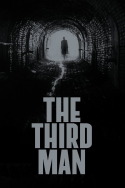
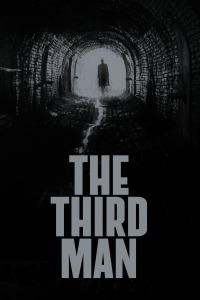
"The Third Man" is often considered to be the best of the film noir genre, and essential viewing for anybody that likes that style of filmmaking. I disagree. I've never been a fan of film noir, but I was floored after my first viewing of "The Third Man". This is a movie unlike anything you've ever seen - with a perfect combination of a great cast, a breathtaking city, an innovative and unusual soundtrack, and some of the most remarkable cinematography ever envisioned on full display. For people who have reservations about seeing another film with the cliched femme fatales and convoluted mysteries, shot in shadows and clouds of smoke, I can assure you that you will not get what you expect. Whether or not you completely embrace the film as much as some others, you'll have no troubles in admitting that it is, in fact, a perfectly designed movie.
Holly Martins (Joseph Cotten) has just arrived in Vienna at the request of an old friend, Harry Lime (Orson Welles). Martins is a pulp-novelist who sees the world in only black and white - a naivety that is certainly challenged throughout the film. When he arrives in Vienna, he learns that Lime is dead. At Lime's funeral, he meets Major Calloway (Trevor Howard), a police officer, who tells Martins to give up and go home. But Martins is invested in the mysteries of the supposed "accident" of Lime's death, and he's also entranced by Lime's beautiful love interest, Anna Schmidt (Alida Valli). Through a series of interrogations with people involved with Lime, Martins deciphers that Lime was struck by a car and then carried away by three men. Two of them are accounted for, and Lime is focused on figuring out who the third was.
It turns out, afterall, that Lime is alive and well. He's only gone into hiding, getting around the city using the sewers and lurking in the shadows. This isn't the same Lime that Martins thought he knew, however. Martins has substantial evidence that Lime has been in the business of watering down penicillin and selling it to deathly-ill patients. Lime's body count, mostly children, is significant. When Martins confronts him about it, Lime gives a famous speech - "In Italy for 30 years under the Borgias they had warfare, terror, murder, and bloodshed, but they produced Michelangelo, Leonardo da Vinci, and the Renaissance. In Switzerland they had brotherly love - they had 500 years of democracy and peace, and what did that produce? The cuckoo clock.".
The cinematography in the sewer chase, the unusual but perfectly fitting soundtrack, the larger-than-life performance by Welles, the city of Vienna... "The Third Man" is a film that transports you into it's world in a way most films can never dream of. It's a perfect movie that deserves it's universal praise. Check out the Criterion Collection release on DVD or blu-ray.
This review of The Third Man (1949) was written by Eric F on 24 Mar 2009.
The Third Man has generally received very positive reviews.
Was this review helpful?