Review of The Theory of Everything (2014) by Matthew C — 05 May 2015
An inspirational, if conventionally realized, biopic that is elevated by great performances from Eddie Redmayne and Felicity Jones.
As mentioned in the review of The Imitation Game, The Theory of Everything also suffers from many of the pitfalls of the modern biopic. Efforts to keep pacing flowing while hitting the important points in the subject's life, for instance, are handled in as contrived a manner as I've come to expect from these types of films. Without even being too familiar with Stephen Hawking, it's easy to spot when notable events in his life are banged together for convenience's sake. Perhaps this is a necessary evil, but unfortunately it takes me out of the film.
A more significant failing (in my opinion) on the part of the script would be in the oft-repeated biopic contrivance of having one's subject almost inexplicably fall in love with their lover at first glance and within the first ten minutes. I understand that time is valuable and that there's a lot of Hawking history to get to, but this takes me out of the film and leaves me doubting the veracity of the relationship. Thankfully, the two lead actors' chemistry helps the relationship along, but Come on! Is every notable figure in human history a victim of love at first sight? I'm serious. Watch these movies.
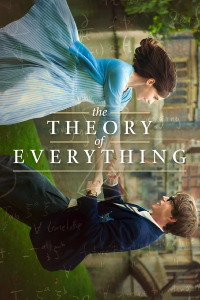
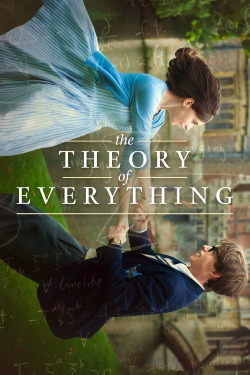
The film is competently directed. The cinematography is actually quite stunning at times. Uses of color and imaginative angles keep the eyes quite busy. Sometimes, however, this imagery is so picturesque that one wonders if the DP is trying to inject a visual style simply to stave off audience boredom. This is a simple story. The photography doesn't need to draw attention to itself, which it most certainly does on occasion.
As noted above, the real meat of the movie is in the portrayals of its main couple. Once their relationship has been established, and Hawking has finally proven himself to be the genius that he is, the film becomes far more enjoyable and the actors really start to shine. Honestly, everything is fairly contrived and cliched until Hawking loses his ability to walk. It's here that the "special-ness" of this acting duo comes into play. Redmayne as Hawking deftly engages in a very physical performance that seemingly limits his emotive ability; and Jones as his wife juggles her undying devotion to him with feelings of resentment about her husband's handicap, and her inadequacy as a caregiver. Neither actor resorts to melodrama. Both performances utilize the appropriate level of restraint while showing unquestionably deep and relatable emotion.
Redmayne isn't the first actor to take on this type of role (Daniel Day Lewis in My Left Foot comes to mind). I wouldn't go as far as to say his performance is a revelation of some sort. The academy, however, really likes it when actors physically transform as the actor does here. His Oscar win, therefore, shouldn't be too surprising, and I wouldn't even say it's undeserved. But if I were voting in the 2014 Oscars, there are many other examples of good work that are "fresh" and "brave" (see Keaton or Gyllenhaal) that I would be more apt to heap props upon. Just a little, unnecessary rant for good measure.
This review of The Theory of Everything (2014) was written by Matthew C on 05 May 2015.
The Theory of Everything has generally received very positive reviews.
Was this review helpful?