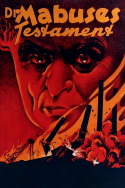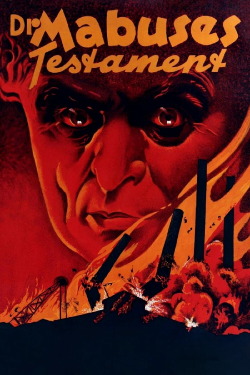
Review of The Testament of Dr. Mabuse (1933) by Jason R — 01 Apr 2009
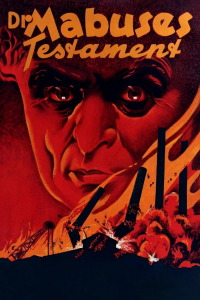
If Lang's "M" is the first masterpiece of the sound cinema's transitional period, then this film might be the first masterpiece after the conversion was complete. Whereas the former film deftly combines the strategies and performance styles of the silent cinema with exciting suggestions for where sound might go, the latter film is an explosion (quite literally) of the sound film's capabilities.
Most exciting among Lang's tricks is probably his path-breaking use of the sound bridge, the aural equivalent to Griffith's mastery of parallel editing. It feels like you're watching the invention of a technique, and yet Lang is already so skilled that it leaves you slack-jawed.
However, the film lacks the emotional punch--devastation, really--of "M." Whereas "M" puts us (uneasily) in the mind of a single character--Lorre's masterful serial killer--this film has such a vast canvas of characters and plot lines that it becomes difficult to find an affective point of entry.
It's thrilling, for sure, just as "Metropolis" is, but the effect is one more of technological awe and professional appreciation than narrative absorption. Subsequent viewings might change that, though, when the desire to connect the various plot threads takes a back seat to immersion in the details of characterization and visual design.
This review of The Testament of Dr. Mabuse (1933) was written by Jason R on 01 Apr 2009.
The Testament of Dr. Mabuse has generally received very positive reviews.
Was this review helpful?