Review of The Spy Who Came In from the Cold (1965) by David B — 28 Jul 2010
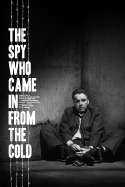
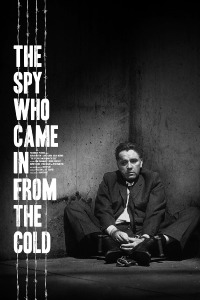
Martin Ritt's 1965 film of John le Carré's novel is one espionage movie that neither springs at us full-on with advanced hand-to-hand combat or exploding propane tanks nor stealthily moves in on us like a ninja. Rather, it forms an envelope of grief, paranoia, and anger that sharpens each rest in the action and choice made by the actors, leaving viewers hanging on every word of the occasionally enigmatic, occasionally vivid dialogue. Le Carré's portrait of espionage as an arm of the grisly, conscience-pounding side of cold-war politics was more than a potshot at Bond's seductive, arrogant dark-horse savoir-faire, razzle-dazzle, gizmos, and wayfaring. It works like an charge of the rotten little skeletons in the spy game's cupboard, connecting the internal afflictions of a worn down fiftysomething British agent to the dilemmas of "values" that disturbed East and West in the mid-twentieth century.
It tracks the universal crisis of whether ends can excuse means to a horrific result: here, deplorable means affect valid ends. Ritt's handling of tension is related to his basic empathy. The movie doesn't dishearten the spirit or cripple viewers with apprehension. Just the opposite, its unflinching authenticity augments our hopes as well as our fears for its characters. He populates the film with grownups who understand or come to learn that their doings have bleak repercussions.
Ritt's effectiveness at endowing his characters with time to wind down in their moods and environments, freed his actors I believe. Burton, pouring himself into the role of agent Alec Leamas, makes abandonment and sorrow into something coercive, even hypnotic. He handles his hard physicality and bagged eyes to bring a checkered wisp. Cyril Cusack, Oskar Werner, and Bloom almost equal him. Cusack, as Leamas's boss, Control, can give a plain inhale of air clandestine implications. Werner brings a particularly foreign vigor and reliable wit to the role of a Jewish intelligence officer named Fiedler. Bloom evokes both frankness and suggestiveness as Leamas's British Communist infatuate, Nan. The director finds the shady refinement that's pivotal to the complex plot's effects with the aide of his understated cast, Morris's perceptively inflected black-and-white camera-work, and the neat, naturalistic production design.
It's not just a dilemma of a devised conundrum but also of an angst indicated to the viewer, the terror of systematic deceit. The Spy Who Came in from the Cold possesses a flame that flutters underneath the angst. From the beginning, when Leamas watches at Checkpoint Charlie for one of his East German spies to cross over (and defect) to the West, this film's surface enigmas unravel with a shrewdly ceremonious accuracy that tempers the latent anarchy. Morris's camera topographically examines a guarded border before fixing on the back of Leamas as he stares through binoculars at the East German gate. Without any bargain artifice, Ritt swiftly puts us on the side of a man of background who is also, beneath his shell, a man of sensitivity. Leamas attempts to live with his knowledge of the worst humans can do, and his knowledge that he's part of it.
When Leamas enters Control's office, the ambiance is muted and grave, burdened with coaxing and bluffing. Then Control says, "I want you to stay out in the cold a little longer." In the following scenes, we're unsure whether Leamas becomes an obsolete lush or is only playing one to catch the eye of Mundt, his East German opponent. Burton is striking in these scenes. He knows that particular sorts of drunks like being coarse and acting uber-masculine, so it's difficult to tell where the sham ends and the real Leamas begins. As the dealings stream into the Netherlands and East Germany, Burton and Ritt know exactly when to pull Leamas into the spotlight. Burton's cynicism, ego, hate and paranoia do something scarce in a spy movie: they give the film a complex sensibility.
Ritt gets at more intricate concerns of nonreligious doctrine than his blacklist dramedy The Front, and in its own understated manner it tackles more of the political rainbow. Nan is a wholesome librarian who comes to Communism out of inexperienced nobility. When Fiedler asks Leamas to explain his science of reasoning and he replies "I'm a man, you fool," or Nan tells him she believes in history and he chuckles, the movie echoes with the self-effacing banter of a filmmaker who's wisely gathered to doubt belief systems and certainties.
Although never thought of as a visual director, and he wasn't really, regardless, with Oswald Morris in The Spy Who Came in from the Cold, Ritt employs grayness not as shadow but as the fitting spectrum to portray exact hues of ethical cloudiness. The sequences that proceed with an assortment of Communist agents augment into progressively outright and engrossing power games. Burton finds a groove with Werner. When the two have a dialogue in the open air, the film itself feels as if to be taking a deep breath, before turning into a terse and foreboding courtroom drama.
This review of The Spy Who Came In from the Cold (1965) was written by David B on 28 Jul 2010.
The Spy Who Came In from the Cold has generally received very positive reviews.
Was this review helpful?