Review of The Silence of the Sea (1949) by Ryan M — 17 Aug 2009
Melville fans searching for another moody crime film from the director should look to the recently released 'Le deuxieme souffle' or to the late-great 'Un Flic', because they'll find no such beast here. To quote the man himself, this film was made back when Melville wasn't "terrified of poetry", and so it evidences a slightly different artistic personality than the one behind his iconic 'Le Samourai' (though it could be argued that 'Le Samourai' is simply film-poetry in another idiom).
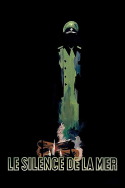
'Le Silence de la Mer' finds Melville in what has to be his most nakedly literary mode. And of course there's an obvious reason for this in the fact that the film is a pretty exacting adaptation of Vercors' famous resistance novel. But while filmmakers usually get flack for narration-heavy adaptations, Melville I think has to be praised for his fidelity to the source, because his decision to tackle the novel almost line-by-line is both aesthetic AND political. It's aesthetic in that the book's central thematic dichotomy of silence vs. speech can only be realized cinematically via the counterpoint of inner/outer monologues that Melville uses here. And it's political in that the text is freighted from cover to cover with "Le mythe de la Resistance", and too much deviation in 1949 so soon after the close of the war could be construed as trivialization. (Melville actually agreed to have the film judged by a "jury" of resistance members to ensure its legitimacy, and he swore that if they condemned it he'd burn the prints.) So if the film perhaps plays like a musical theater piece, it seems wholly appropriate artistically and attributable to an amount of reverence for Vercors and the resistance writ large (which Melville himself was a part of).
Of course, Melville DOES deviate a bit in an effort to embellish the story (most off-puttingly when he references the then-nonexistent concentration camp Treblinka in a 1941 setting), but no particular scene save for Ebrennac's blindingly allegorical flashback seems not of a piece with the whole. I think it's important to consider the mythical aspects of the film when reckoning with it, because certain of the characterizations may ring falsely if divorced from the immediate post-war "Frenchness" of their origin. And I think in the final analysis this is much more a tale of humans working through a long and embattled reconciliation than it's a story of persisting divides. Certainly WWII created some of the deepest and most harrowing schisms yet known between man and his fellow men, but Melville stresses here that even these incredible divisions are somehow bridgeable with the aid of culture, conversation (even one-sided!), and something as simple as shared livingspace. It's not tea with Hitler -- nor will it ever be -- but it's some kind of gesturing toward a principled, universal sympathy for humanity. Call me old-fashioned but I think it has to be considered one of Melville's best.
This review of The Silence of the Sea (1949) was written by Ryan M on 17 Aug 2009.
The Silence of the Sea has generally received very positive reviews.
Was this review helpful?