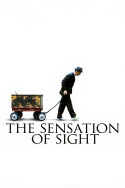
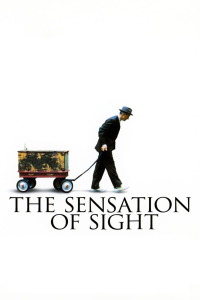
Review of The Sensation of Sight (2006) by Benjamin F — 09 Jan 2010
The Sensation of Sight is another of those largely off-the radar independent films. As those tend to be, this one's in no way flawless. But it's not bad, either.
The excellent David Strathairn helms a solid ensemble cast with Ann Cusack, Daniel Gillies, Ian Somerhalder, Joseph Mazzello, Jane Adams, Elisabeth Waterston, and Scott Wilson. Each of them play their characters well, and each character possesses an intrigue of their own.
The film feels kind of awkward at the start, throwing you into its "verse" structure - which itself would come off as horribly pretentious in most directors' hands, but in this film's case, it fits - and array of seemingly unrelated characters. It's only as you get further into the film that the connections between these characters you find yourself initially jumping between begin to become clear. It's then that the film begins to 'gel,' and it begins to reach its potential. Unfortunately, that potential is never fully achieved - most of the character storylines (And as you find out by the end, there's really only two central webs of character story here, which merely overlap - there's no deep connection beyond acquaintances.) peter out and have no real resolution to speak of. For all the time spent on Gillies, Waterston, Wilson, and Adams' characters, you don't arrive at anything worthy of the buildup. In short, half of the film's plot is simply dropped at the climax, and for that, I can't give it a higher score than I have.
Likewise, when you get the full story behind Strathairn and Somerhalder's characters' suffering - Mazzello's deceased Tripp at the center - while the climactic scene is intense, the details behind it all and the denouement come off as a little abrupt and absurd. I don't quite buy Finn running home happily after that scene, though the story needed him to return to his family to end properly. Nor did I completely buy Finn's backstory when it was at last revealed in its entirety. If anything, while it worked as a concept, it made the reality of his character selling Tripp's encyclopedias one volume at a time out of a pine box look all the more absurd - and not in a way the writer-director was going for.
As long as the film was, the ending actually felt rushed - like we hadn't seen enough to get Finn to where he was then, to the abrupt epiphany he had then. It didn't mesh with the rest of the film, and much of the rest of the film was too vague in its dialogue at times. We didn't learn enough specific details about the characters and their pasts. We got a good feel for each of them - enough competent development to want to get more - but not much more than that. Waterston and Wilson's Daisy and Tucker almost felt unnecessary and weren't used and developed enough. For all the screentime Daniel Gillies got as Dylan, we didn't get anything resembling complete development or a satisfying story for him when he was treated with about as much importance as Finn. Ian Somerhalder's Drifter got to be moody and speak to Finn's son - they waited too long to make it clearer what they were doing with Mazzello's silent performance as Tripp, and while each of these characters were intriguing on their own, we just didn't get to know them enough. They were obviously three-dimensional conceptions - which always beats a drama littered with two-dimensional cliches - but we only got to know one to two dimensions of each of them. And as a result of that and all that was left incomplete, it feels like we've suddenly skipped ahead past some very important things in the ending scene. The story wasn't over, and the climactic scene wasn't enough to suddenly bring about this big change in Finn.
Moving on - from the technical and atmospheric perspectives, the film's quite lovely. The overall pacing, though slow, works - it's just an unusual case of a long, slow-paced film that still didn't feel complete and ready to end when it ended. There's a lot of fantastically framed shots that do well to highlight late fall or so in Peterborough, New Hampshire. Fantastic use of lighting and color. And to complement that, a moody indie soundtrack that suits the overall despondent tone of the film extremely well. The original background riffs for the score all fit the film like a glove, too. The film gets an extra half-star from me here for the cinematography and music.
In the end, The Sensation of Sight is a good - occasionally pretentious - movie with a lot of solid ideas behind it paired with a lot of execution problems. The script needed to be a bit bolder - the characters needed more developing. The film's dreamlike atmosphere was great, but a dreamy conceptualization is no excuse for being more vague than specific and keeping the audience at arm's length from characters we needed to get to know more intimately in order to achieve the full impact of their largely incomplete stories. I can't help but wonder that if after all the hopelessness in the film, the ending wasn't just tacked on because the writer-director couldn't figure out how to organically bring the protagonist to his revelation - the answers he sought - in the end. With a few more revisions, some more careful consideration, and far more concrete details, this could have been a great film. Instead, it's just a good, unpolished one elevated a bit by a strong cast, and great cinematography and soundtrack. The film's biggest flaw is in its failure to answer its own central question.
This review of The Sensation of Sight (2006) was written by Benjamin F on 09 Jan 2010.
The Sensation of Sight has generally received positive reviews.
Was this review helpful?