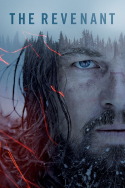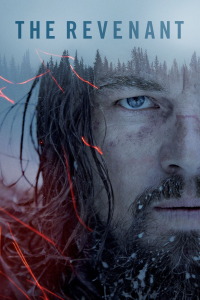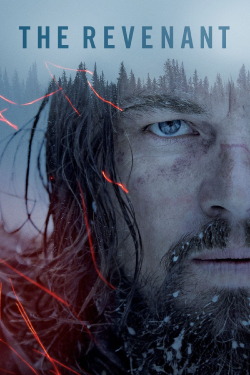
Review of The Revenant (2015) by Marius J — 14 Sep 2016
Imagine it's 1823 and you're somewhere near the Missouri River. You.
Haven't eaten anything in the last few days except some.
Buffalo-berries, so what do you do? You eat a buffalo liver, raw. If.
You're Gugh Glass (Leonardo DiCaprio), the protagonist in "The.
Revenant," that's how you pull it off. You first get lucky for a pack.
Of wolves to chase down a buffalo, wait till the dusk for a Pawnee.
Indian to scare away the pack, then crawl over the snow to beg for a.
Piece of animal gut.
"The Revenant" (2015) stems from a story of a frontiersman, Hugh Glass,.
An employee of the 1823 Rocky Mountain Fur Company dispatched for an.
Expedition to the upper Missouri River. Cinematographic choices, for.
Those among you who have already seen Birdman (2014), might very well.
Seem like déjà vu in "The Revenant." Alejandro González Iñárritu, the.
Director, once again relies on long takes to achieve an immersive.
Cinematic effect. This tendency flips the status quo for heavy use of.
Montage techniques, oxygenating the film industry, making "Birdman" and.
"The Revenant" significant milestones within the Ostranenie crusade.
A trapper who trades fur in Missouri, Hugh Glass becomes what others.
Like David Crockett only fantasized about becoming. After a grizzly.
Mutilates his body, Glass finds himself surviving the cruel winter.
Gnawing at roots and devouring raw jerking fish fiercely seeking.
Revenge on his companions who left him for dead.
Original texts show that we cannot retrieve a detailed Story of Glass's.
Journey. It's this that gives Iñárritu every right to be historically.
Inaccurate, and he makes sure to leave a few of his fingerprints over.
The narrative. Nineteenth-century stories such as the narrative by.
James Hall titled "The Missouri Trapper" and published in "The Port.
Folio" (1825), show that Hugh Glass didn't have a family; he traveled.
Tilton's Fort, collected his cash and quietly left.
This, however, doesn't dramatically enrich the movie in its narrative.
Complexity. It's actually quite a desperate attempt to make a.
Simplistic story look less so. Iñárritu invested more in actions and.
Imagery than conflict, let alone character development. For you out.
There looking for idiosyncratic characters and counter-intuitive.
Revelatory narrative twists like the cumulative, startling conflicts we.
See in Tarantino's "Hateful Eight," The Revenant may seem flat, even.
Boring.
After Glass remains alone in the wilderness the story starts giving way.
To for Lubezki to celebrate the mesmerizing landscape. Even if little.
Dialogue makes "The Revenant" obtuse, the clash between a single man.
And the vast wilderness makes sure to patch any gaps with a fabric of.
Visually striking elements.
Lubezki's photography pushes the film far beyond the story, giving us.
Those jaw-dropping scenic moments. A glimpse of the moon, the sun-rays.
Scattering among trees, the Rocky Mountains at dawn and sunset, are.
Shots which nudge us in a state of reverie if not complete submission.
Diegetic sound and natural lights, void the imagery of any insincerity.
The image becomes brutally pure. Watching these shots feels as if.
Feathers caress our cheek while razors cut through the other.
The color choice resonates with the grandiose tragedy of the story. The.
Color palette is cold with predominant shades of white, gray, green,.
And blue. The shades are somewhat dull reflecting the murky atmosphere.
Of the winter. Iñárritu carefully selected bright colors such as shades.
Of amber emanating from a kindle, or shades of red splattered on the.
Snow as blood oozes and spills to contrast the dull setting and.
Poeticize narrative events. During the night, when Glass rests his.
Wounds against a fire in a cave he digs in a snow hill, the camera.
Captures the small radiant cave cornered in the bottom-left side of the.
Screen while the monstrous Rocky Mountains fill the second plane. Such.
A composition dramatizes the size of nature versus that of a single man.
While colors, shot using deep-focus, make this distinction striking.
Iñárritu made sure that bright colors are reserved for the most.
Spectacular shots where every stain of blood and burning of powder seem.
Like a celebration.
Like in Birdman, Iñárritu effectively makes use of the long take.
Technique. Almost all the intense scenes contain one or a few long.
Takes and the results are engaging. The camera seamlessly follows the.
Characters while it tilts, pans, slants, and zooms in and out to.
Capture the microcosm, such as a flying arrow, as well as the.
Macrocosm. The camera in this sense is more like a living thing, always.
Distracted by either characters or elements of the mise-en-scène. The.
Camera sits with some for a while only to get distracted by other.
Characters or props and then follow those without any editing.
In-between. Lubezki uses this technique whenever possible, transforming.
It into a subversive cinematographic leitmotif. As for the viewer, the.
Absence of editing in such scenes bypasses the typical flickering.
Effect allowing us to enjoy a continuous experience of the action. The.
Uninterrupted experience accounts for constructing our presence in the.
Movie as it simulates our real-life existence where our eyes perceive.
The world in a continuous way. Each long take has an important.
Cumulative effect of such experiences, unmercifully making us suffer.
Alongside Glass while giving the film an innovative fluency.
"The Revenant" is a striking visual spectacle orchestrated at finest.
Even if the narrative is quite linear, visual elements disrupt that.
Sense, making the film less an adventure and more of a pensive.
Pilgrimage. Be prepared to discover DiCaprio overwhelmed by afflictions.
And void of physiological change. It's nothing like "Birdman" or "The.
Hateful Eight," where scenes seem to follow the cause and effect logic;.
"The Revenant" is composed of relatively loose scenes where the.
Cinematography is given central role. If you like reaching for these.
Cinematographic pinnacles where the Lubezki's scenic photography.
Escorts us from one scene to another, then pop some of the popcorn.
You've stashed in the kitchen and let "The Revenant" whip your soul for.
Two hours and a half.
This review of The Revenant (2015) was written by Marius J on 14 Sep 2016.
The Revenant has generally received very positive reviews.
Was this review helpful?