Review of The Remains of the Day (1993) by Spangle — 25 May 2017
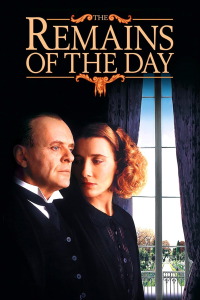
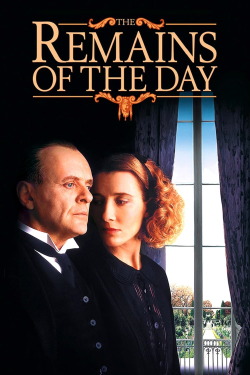
My first Merchant-Ivory production and, well, The Remains of the Day is splendid. Set in the 1950s with flashbacks to the 1930s, The Remains of the Day details the time and events held in Darlington Hall as seen by its longtime head butler Mr. James Stevens (Anthony Hopkins). From serving Lord Darlington (James Fox), a naive man who got tricked by the Nazis into joining their cause, to serving former American congressman Jack Lewis (Christopher Reeve), Mr. Stevens has been around for a lot, but he has experienced very little. In the name of serving, he has sacrificed himself, his happiness, and his life to fulfill his duties as a man-servant with honor, dignity, and respect. By the time he begins to regret some of these choices and miss the things he looked past, it is far too late to actually go back and experience them. Brimming with rigidity and staunchly set in its period design and mannerisms, The Remains of the Day is a film about a man who was never afforded time to actually be himself.
Set in the British class system of the 1930s, Mr. Stevens is a man who puts dignity above all else. His father may be dying and he may be quickly gaining feelings for housekeeper Ms. Sally Kenton (Emma Thompson), but neither the loss nor the love are allowed to be felt. For one, his father would have wanted him to focus on his work and dignity. Second, it is improper for a butler to be married to a fellow servant. As such, neither event gets explored and instead, they get compartmentalized and dumped into the abyss Mr. Stevens has created within his soul. He is the human embodiment of Spongebob in the episode where he only knows "fine dining and breathing." However, the latter is entirely optional should he be requested otherwise. For Mr. Stevens, being a butler is his life. No matter how many dignitaries or politicians arrive at Darlington Hall, Mr. Stevens is oblivious to the goings on of the manor in regard to conversation. When it comes to running the place, he runs a tight ship and expects the very best of the fellow servants and holds them to the same standard he holds himself. Unfortunately, in shutting his eyes and ears to what goes on around the manor, he loses sight of events. While Lord Darlington quickly falling into the grasp of the Nazis, Mr. Stevens remains oblivious. He is just there to serve his well-mannered and gracious lord who is not to be questioned or debated with. Rather, he must only appear when requested and do as instructed. As time and life passes him by, Mr. Stevens remains committed to servitude, but with regrets. As the world around changes into one that is less structured and less focused upon gentlemanly behavior, he realizes that his efforts in remaining dignified may have been misguided. Above all, watching Ms. Kenton get married and divorced leaves him wondering what could have been had he actually indulged in his love for her, which was certainly requited. He was a man so committed to his career and a false sense of duty that he was unaware of the humanity of the home. He knew where everything went, where every room was, and what everybody's duty was in the home. However, when tasked with explaining the "birds and the bees" to Mr. Cardinal (Hugh Grant), he was rendered speechless. Through working so much, he had forgotten what it mean to truly live his life. When there begin to be cracks in his own rough exterior, he tries to suppress them and throw himself into his work. Through years of service, he has learned how to not feel and just do. This, however, has left him frightfully unfulfilled and constantly forced to endure the solemn recognition that his dedication left him working through life and never taking time to smell the roses and enjoy life. Now that his time is becoming increasingly limited and any reunion with Ms. Kenton out of the question, things will only become lonelier for this man who sacrificed himself to what he believed to be a noble pursuit.
In many films that depict butlers, their actions and work are background noise to the important conversations going on. However, here, the work is front-and-center. In exploring the life and times of a butler surrounded by important events, director James Ivory is not just able to explore the subtle changing of the times in Britain before and after the second World War, but also able to explore the life of a butler itself. Featuring complete self-sacrifice and dedication, the life is not an easy one, but it is one approached with pride by men such as Mr. Stevens who find it to be an honor that he is able to sacrifice his life in such a way. This is his calling. His passion. He takes it seriously and expects everybody else to do so as well. Ivory's film honors the men and women who dedicate themselves to servitude and receive very little in return for their honor, dignity, and manners.
This review of The Remains of the Day (1993) was written by Spangle on 25 May 2017.
The Remains of the Day has generally received very positive reviews.
Was this review helpful?