Review of The Prom (2020) by Dan_B — 13 Dec 2020
Ryan Murphy nos ofrece un mensaje loable y optimista sobre la diversidad, la homofobia y la inclusión (sus temas e intenciones de siempre) pero a través de un musical algo anticuado, tanto en su factura musical como en la manera "educativa" y bajalínea con que aborda esos temas. La película funciona mejor cuando se centra con humor afilado e ironía en la vanidad de sus personajes y, last but not least, nos regala un nuevo festival de la portentosa Meryl Streep.
Ryan Murphy offers us a well-meaning and optimistic message about diversity, homophobia and inclusion (his usual themes) but through a somewhat old-fashioned musical, both in its musical bill and in the "educational" way in which addresses those issues. The film works best when it focuses with sharp humor and irony on the vanity of its characters and, last but not least, gives us a new festival of the marvelous Meryl Streep.
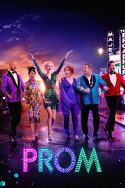
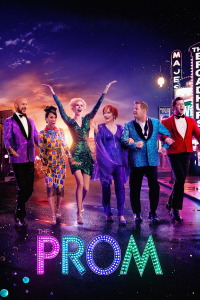
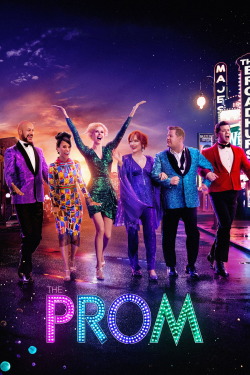
Two musical comedians, Dee Dee Allen and Barry Glickman (Meryl Streep and James Corden) are defenestrated by critics after their last Broadway premiere, which they were celebrating in a New York bar. Along with a showgirl, Angie Dickinson (sic) (Nicole Kidman) and the bartender of the place and also an actor "on hiatus" Trent Oliver (Andrew Rannells) find out that in a conservative town in conservative Indiana the parents' meeting of a school He decides to suspend his graduation dance (the Title Prom) to prevent a lesbian student, Emma Nolan (Jo Ellen Pellman) from attending it with her girlfriend. The comedian quartet decides to travel to Indiana to defend Emma's cause and thus regain notoriety and prestige.
We could place El baile in the subgenre of movies about proms, a true institution of Yankee culture, so it affects rites. A masterpiece of the subgenre would be Carrie, for example.
So there are two thematic lines of this musical comedy: homophobia and the struggle for inclusion on the one hand and narcissism, the selfishness of the stars and their attachment to success, embodied above all in Dee Dee and to a lesser extent in Barry.
Regarding the first, the film is a well-intentioned but somewhat exhausting permanent down-line on the right to diversity, in favor of inclusion and against homophobia, faced with unchanging seriousness or sentimentality. Instead, the best moments of the film are when he humorously describes the vanity of the characters. They could have included fewer "educational" songs and more songs by the villains and introduced more disagreements or nuances into the group of "good guys".
The songs: the songs sung by comedians fit in with the emphatic and bombastic (and somewhat old-fashioned) style of classical musical comedy that works best with irony. The songs of Emma and her girlfriend have a more modern and pop nuance, but up there.
The dances: it shows off an epileptic and overly edited choreography.
The cast: the film includes perhaps the two greatest Hollywood divas. The one that saves the film is the marvelous performance of Meryl Streep: she sings excellently well, she again shows herself as an absolute comedy dominator, her character is the only one who presents some folds and contradictions and at the age of 70 she shows energy and usual magnetism. The wasted Nicole Kidman gets a fairly minor character, a loser. As always, she does it well. The most sentimental character is that of Corden, who as an actor is quite bland. The girls sing well. Emma's girlfriend Alyssa (Ariana DeBose) is a reincarnation of Leah Michelle.
Watching this film, we come to understand that the universe of its director, Ryan Murphy, the exasperated style in which she frames all her fictions, is that of the musical.
This review of The Prom (2020) was written by Dan_B on 13 Dec 2020.
The Prom has generally received mixed reviews.
Was this review helpful?