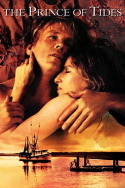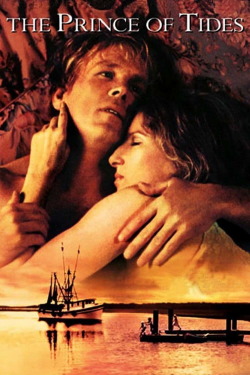
Review of The Prince of Tides (1991) by Cameron J — 18 Jul 2014
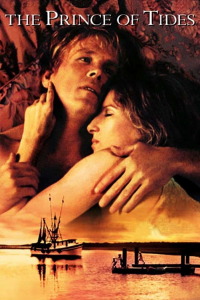
"Now I realize who killed the Prince of Tides! How can you tell how it used to be, when there's nothing left to see?" Yeah, I don't think someone as perky as Jimmy Buffett necessarily fits here, because you know that you're in for a chilling ride when you look at the premise of being stuck in the tides with Nick Nolte. This film is actually about some dude trying to, as Wikipedia puts it, "overcome the psychological damage inflicted by his dysfunctional childhood", which makes me question all of the acclaim being directed as Nolte, because acting psychologically damaged can't be much of a stretch for him. Well, this character must be at least a little bit crazier than Nolte, because Nolte was enough of a decent-looking guy back in the day to maybe earn him a lady who is a little better-looking than Barbra Streisand. Honestly, I suppose Nolte is going to hook up with whoever Streisand wants him to hook up with, because she's also directing here, and I'd trust her advice, seeing as how she seems to know what to do when it comes to calling the shots. So yeah, this film is quite good, although Streisand stands to craft this thing with a little more uniqueness.
This film is very '90s in feel, and that piece of conventional direction makes the other storytelling tropes all the more glaring, and it's hard enough to disregard the predictability of this romantic drama on paper, especially when the film gives you plenty of time to soak in the conventions. Clocking in at about 132 minutes in length, this intimate drama is simply too long, holding your attention throughout its course, - largely because it takes advantage of the length to flesh things out pretty thoroughly - but still dragging its feet with filler, if not material that isn't grand enough in scope to justify its excessiveness. When the film isn't jarring between its layers, it's sticking too deeply with its storytelling formula throughout its lengthy run, resulting in a sense of repetition whose aimlessness still cannot obscure the predictability. If the familiarity doesn't make this narrative predictable, then it's the contrivances, which include dialogue of great snap, but limited believability, and characterization which, in addition to being stereotypical, feels manufactured in a way that forcibly drives certain conflicts. This type of manufactured characterization, while not as serious as I might lead you to believe, stands as a supplement to this film's melodramatics, which are generally compensated for solidly by many a genuine storytelling touch, yet still stand, occasionally as soapy, when backed by some overt sentimentality to Barbra Streisand's storytelling which betrays what subtlety there is to this affair. The final product is never less than thoroughly compelling, but Streisand seems to want this film to be more than what it can be with all of its shortcomings, and such an ambition ironically stresses the issues of the drama, until it finally falls short of what it would have been if there was more comfort to Streisand's efforts. Nonetheless, Streisand's and the other storyteller's inspiration stands firm enough to make the final product a consistently compelling and ultimately rewarding melodrama that even endears on an aesthetic level.
There's an almost surprisingly considerable deal of attention being placed into the style of this drama, with Stephen Goldblatt delivers on often flat, and just as often hauntingly subtle cinematography, while James Newton Howard really impresses with a formulaic, but grand and captivating score that supplements resonance, when it doesn't exacerbate sentimentality. The aesthetic grace of this drama sort of intensifies a sense of manufacturing here, but much more than that, it livens things up, doing a lot to drive the entertainment value which in turn does a lot to draw your attention towards the genuine value of this drama. Although formulaic and rather melodramatic, this story is rich with potential as an intimate study on a man coming to terms with his own demons as he works to define his suicidal sister's, and finds new love along the way, at least brought to life by a solid script. Becky Johnston's and source material author Pat Conroy's script has plenty of repetitious fat around the edges, and gets to be manufactured with its histrionic dialogue and characterization, but it is nonetheless pretty strong, with generally razor-sharp dialogue and an amusing sense of humor to liven things up amidst realized and thorough exposition which tosses in some surprises to break up the monotony and predictability of this formulaic melodrama. Barbra Streisand's direction further reinforces the engagement value of this film, with tight pacing that keeps entertainment value consistent, until punctuated by a certain sentimentality that, when realized, transcends contrivances in order to resonate with its drawing you into the struggles and triumphs of well-drawn and, of course, well-portrayed characters. Where this character study truly thrives is in its performances, as just about everyone convinces and has a time to shine, and yet, hardly anyone flirts with the effectiveness of leading man Nick Nolte, who is asked to do only so much, but does it all impeccably, whether he be delivering on the sparkling charm of a good-hearted man struggling to escape his past through humor, or delivering on the enthralling emotional range which sells this man's gradual achievement of revelation and a new grip on life. Nolte, especially with his electric chemistry with Streisand, carries this intimate drama as one of the key sources of inspiration which allow the final product to transcend its shortcomings as a thoroughly rewarding affair.
When the tide falls, under the pressure of conventions, repetitious dragging, and melodramatics which are made all the more glaring by sentimentality threaten to leave the final product to fall short of its potential, and on the backs of handsome cinematography by Stephen Goldblatt, beautiful score work by James Newton Howard, witty and well-rounded scripting by Becky Johnston and Pat Conroy, heartfelt direction by Barbra Streisand, and solid performances throughout a cast which Nick Nolte stands out from, "The Prince of Tides" rises as a rewardingly intimate portrait on finding personal revelations in yourself through family and new love.
3/5 - Good.
This review of The Prince of Tides (1991) was written by Cameron J on 18 Jul 2014.
The Prince of Tides has generally received positive reviews.
Was this review helpful?