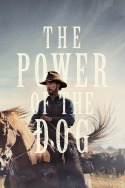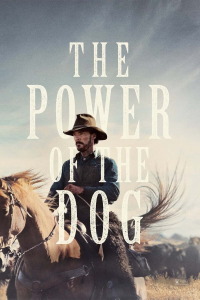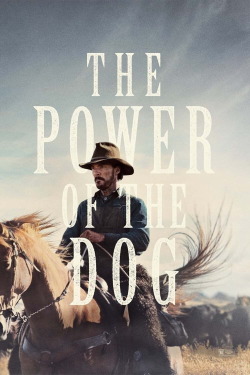
Review of The Power of the Dog (2021) by Aceshop3 — 26 Nov 2021
TL;DR: Jane Campion made another masterpiece, perhaps her greatest, and this from someone who didn't think Angel At My Table or The Piano could be topped. A sweltering, puzzle-box, jewel of a film. Some say it is a "slow-burn", but when there's a piano-banjo duel that feels as tense as a high-wire act between two skyscrapers, I think it's fair to say that this doesn't feel slow even if it might technically be. The astonishing cinematography by Ari Wegner and an unsettling score by Jonny Greenwood, and four stunning performances, keep this going till the credits, when you realize the only flaw is that it isn't far longer. Awards bodies should probably create new accolades for Kirsten Dunst for her masterstroke of a performance that is the film's crown jewel, as well as Benedict Cumberbatch for whom this is hands-down a career-best, one that will make you rethink everything you know about him: both deliver imperceptibly shapeshifting characters. For those revisiting this after your first watch: after you've worked out the "how", you might want to rewatch Rose's monologue to Peter, her distress and his blithe assumption that that is what she wants.
On a meta level, the film is a deep-dive into what "masculinity" is: is it a performance? Is it fundamentally misogynistic, classist, and homophobic? Who claims "masculinity"? On a basic plot level, it's a story about alliances and rivalries within a family and along the class divide in 1920s Montana.
We get a rich character study of four central players. There's Phil Burbank (Cumberbatch) & his brother George Burbank (Jesse Plemons, stunningly naturalistic), rich ranch-owners. Phil is spiteful, whipsmart, and nostalgic for the "real men" of the past. George is his soft-spoken foil who harbors a secret desire to move into society. Phil and George visit an inn, owned by a widow Rose Gordon (Kirsten Dunst) and her effete son, Peter Gordon (a career-breakout for Kodi Smit-McPhee). Peter, the put-upon "sissy" may be the one character not trying to put on a "face". But what we assume about him comes into scrutiny.
Based on the Thomas Savage novel, the story shifts into gear when George marries the working-class Rose, who moves onto the ranch, setting off an epic Phil-Rose battle of wills. Why? Would Phil torture any woman George would've married? Is it because Rose is working-class, because she's a woman, or because she's Rose? Here's where things get subversive: Rose is exactly like and nothing like any leading female character Campion's shown on-screen. In the way she careens into alcoholism, abandoned by George in an isolated mansion, Dunst grabs the audience's sympathy and never lets go. But in the way she plays every scene with multiple interpretations, she's not the paranoid drunk one might assume. A powerful monologue delivered while drunk to Peter in the final act, with Dunst careening between laughter, tears, amidst a shocking realization about her son, we realize what makes Rose tick.
Meanwhile, Phil has sunk his teeth into Peter. What does Phil mean to do? What ulterior motives does he have? What has he hidden about himself? His psychological torture of Rose may have revealed much of it already, but it's when Phil is alone, and later with Peter that you get to see how truly universal and beautiful this twisted character is. The trick, perhaps, is in realizing this isn't just about Phil's masculinity, but Peter's and George's too. Or maybe it's about goodness and kindness, things upon which all of Rose's words depend. What the patronized, gaslit Rose knows, tries and fails to communicate versus what the savant Phil knows and communicates, how that shifts and inverts through the story, what it says about humans—that represents the real tragedy. Campion has outdone herself.
This review of The Power of the Dog (2021) was written by Aceshop3 on 26 Nov 2021.
The Power of the Dog has generally received positive reviews.
Was this review helpful?