Review of The Piano Teacher (2001) by Lauree K — 06 Jun 2009
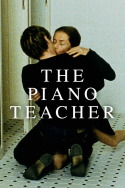
Michael Haneke may be the best living, contemporary filmmaker. The Piano Teacher is a love story, of sorts; or more a story of how far we are capable of transgressing relational boundaries, psychological and physical, and still interpret it as "love.
" Isabelle Huppert is a piano instructor at an upper-class music conservatory and trains her subjects with a fanatic rigor--she does not offer suggestions, but corrections and speaks as if Schubert's compositions were for and understood by her alone.
At home, she harbors a psychological relationship with her mother that Freud would kill for--her dynamic with her mother is confused, each vying for the role of dominant, and where, despite constant fighting (and plenty of room), they share the same bed.
Huppert's lifestyle represents, above all, a relentless appreciation of systemic control--in response to her mother (or the very concept of a mother and of biological domination), when at remove from her home life, she worships discipline, whether in herself (she never smiles) or in others (she rarely instructs students, but rather points out errors--as if only to maintain an image of superiority).
This strictly controlled balance is upset with the arrival of Benoit Magimel, a young pianist of prodigal talent but little concern for discipline, who, after meeting Huppert at a small home recital, decides to audition for her class on a whim.
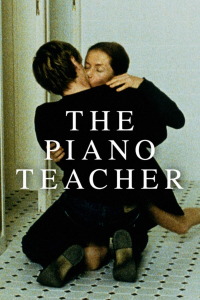
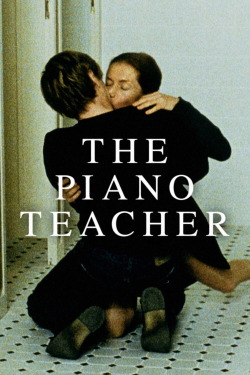
The two, as the cover of the DVD will tell you, become romantically involved, although 'romantic' is not necessarily the best word. Magimel is a sentimentalist--his idea of music seems to be a hobby, albeit a noble and traditional one, while his idea of love, like most normal people's, is two people devoted to each other.
Huppert is not quite as persuaded by flirtatiousness--her approach to music is as another intensive system of control; she worships purity in form, and to her, the key to being a perfect pianist is hitting the correct notes at the correct times.
She praises a complete lack of emotion and a total devotion to the piece--it goes without saying that submission is the key theme in the film, and it is important that Huppert believes a pianist should submit themselves to the piano, not the other way around; in other words, in all the systems of control that she has created she has found a way to play the role of masochist.
She is a severe woman; her permanently cross face isn't a result of unhappiness so much as it is a indicator that she views happiness as a frivolity. In her relationship with Magimel, she believes to have found, as a masochist, the dynamic she has wanted--he as pianist, her as piano.
Her approach to classical composition and performance is the same as her fetishized concept of love; a dependence not on emotion, but on structure; like sheet music, she writes a list of the acts she wants Magimel to perform on her, exposing her desire to become not the recipient of love, but an instrument of it.
It is a pure submission to mechanical enlightenment--simultaneously abused, and yet, centrally, in control. Magimel, naturally, has his doubts, and his response--to deny and then perform with spite--Huppert's demands is particularly fascinating and frightening.
When hit, after asking to be hit, Huppert balks and pleads to stop, but what are the implications of this? Is it part of the act or does it reveal something about masochism--is it a desire that is best left unfulfilled, and does the very gratification of it deny its intended pleasure? Masochism displays a tremendous psychological curiosity--to explore, without bounds, paths toward sexual and spiritual gratification, toward an ascetic love.
The whole affair is filmed by Haneke, also void of sentimentality and is filmmaking at its most fearless and provocative. Extra layers of depth are added if you consider how Huppert's submission as an actress enters into the dynamic.
This review of The Piano Teacher (2001) was written by Lauree K on 06 Jun 2009.
The Piano Teacher has generally received very positive reviews.
Was this review helpful?