Review of The Piano Teacher (2001) by Al M — 11 Aug 2010
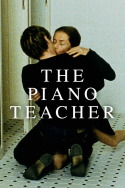
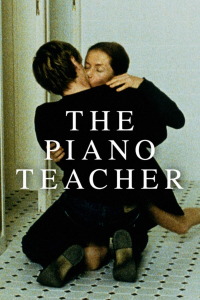
The first of Haneke's massive award-winners, as well as his heaviest film. After his widely acclaimed project, "Code Unknown" (2000), Haneke stuck with French-language film yet again with this odd and deliberately disturbing love story that focuses on the well-being of anybody involved in a loving relationship.
After hearing about this film, I sought out those who viewed it, some by chance, some by decision. The ones who happened to merely stumble upon this film all stated that they felt angry and confused while watching it, while the other group stated similar facts, their lack of innocence to Haneke's work provided a less frustrated reaction and more of a shock. I fell into this category. More that once in this film, I found myself completely in discomfort, a feat not many directors can accomplish. Haneke's simply shot and symphonic film plays with the perceptions of beautiful people and shows the dark side in all of us.
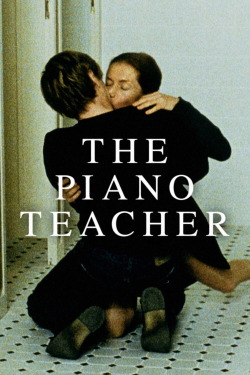
The film, though set in Austria, is about a French piano teacher named Erika, who is very strict and methodical in her performance. She teaches her students with that harsh mentality to push them to limits they think cannot be ventured into. She talks over the music, gives advice and gets quite stern with her pupils. After this facade of normalcy has passed, Erika then expresses her sado-masochistic tendencies either at home or at an adult bookstore. This revelation comes like a slap to the face in the viewer. It is so unexpected and shocking to find this woman is completely psychotic...but not necessarily by her own accord. She lives with her domineering and imposing mother, with whom Erika shares a bed. Her father has been absent for years and her behavior could suggest (never implied) that she could possibly have had a sexually abusive relationship with her father, thus explaining her need to feel love in the most unpleasant and painful ways.
While all this happens, a young engineering student who is smitten by her knowledge of classic composers like Schubert, gives up his regular studies to attend Erika's music school. He is a vibrant and very polite young man, and he takes Erika's snobbish attitude as growing ardor and starts to make advances. This is where the truth starts to come out about Erika and the emotional rollercoaster begins. Where two differing lifestyles and actions clash with each other.
Initially, this film should be regarded as morbid. But like all of Haneke's works, this morbidness is very convincing and real. It is never put past the viewer that the person sitting next to them in the audience could be enduring similar problems, you will never know. Haneke is a master at capturing this reality. There is no overkill with the heavy subject matter. After viewing certain actions on Erika's part, the feelings of sympathy arise almost as quickly as the uncomfortable feelings. Erika is a damaged woman, and although some of her ways of dealing with her inner problems are sick, we cannot say she is an evil woman. She is a truly tragic protagonist.
An interview with Isabelle Huppert, who plays Erika states that she wants to be loved, but not seduced. An attitude clearly shown in her meetings with Walter (Benoit Magimel). At first, she stands upright and looks down on him as an inferior, but little by little, her weaknesses begin to show, until Erika's sanity eventually collapses, much like the psyche of her hero Schubert.
Performance-wise, this is said to be the finest achievement of Huppert's career. And a comment like this is verily justified. Although notable in French cinema for decades, what Huppert brings to the role is highly energetic and tasking. She plays the emotional wreck Erika with sheer precision. ON top of that are Benoit Magimel as the young protégé who vies for Erika's affections. Between the two is Annie Girardot as Erika's mother, an excellent contrast in overall character attitudes as she embodies Erika's professional attitudes. The plot revolves heavily around these three.
Considering the Piano as a character should also be made known. This instrument is prominently featured using Christian Berger's typical static shooting style. Where shots of the keyboard and the fingers gracefully moving over the keys are documented with as much care as Berger's shot of televisions in previous Haneke films. Which is an interesting observation to make, where Haneke's other works explore the media's influence over the minds of humans, yet The Piano Teacher (originally titled "Let It Bleed") turns its eyes toward art itself, almost ensuring us that no one can truly be safe from our own thoughts.
A very disturbing and heavy film that even had me unknowingly crumpling up papers and tossing them at the screen in hopes of a cut to be made to the film. Fantastic filmmaking.
This review of The Piano Teacher (2001) was written by Al M on 11 Aug 2010.
The Piano Teacher has generally received very positive reviews.
Was this review helpful?