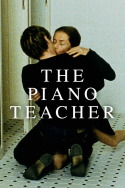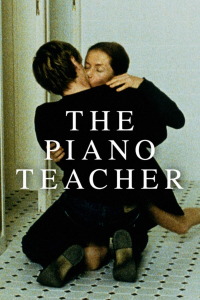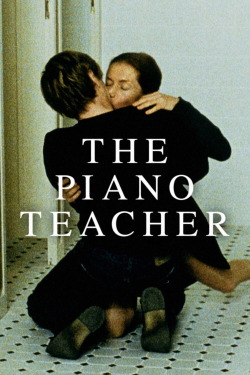
Review of The Piano Teacher (2001) by Harry W — 19 Dec 2016
Featuring one of the most critically acclaimed performances from Isabelle Huppert, The Piano Teacher sounded like an engaging French drama.
With all the emphasis put being the rather "unpleasant" or "shocking" nature of the subject matter in The Piano Teacher, it seemed as if the experience was going to be a very confronting one. Maybe that was the case back in the film's original release from 2000 or maybe I'm just desensitized to the kind of subject matter handled in the film, but either way I didn't see eye to eye with the critical proclamations. Though The Piano Teacher deals with some extremely edgy subject matter, the film itself is very subtle in doing so. The drama in the film rarely comes from what is being said, rather what is implied based on the silence of the characters. It is hidden within them. And when the story has to confront the darker aspects of its material, it isn't any more explicit with them. The film is heavily moderated with how it depicts its subject matter so that it is rarely visual, rather relying on the implications of the silent story to tell its story. Unfortunately, it was too silent for me to make any sense of what was going on.
The story in The Piano Teacher is a very simplistic one which uses the hook of its psychosexual themes to separate itself from the crowd. While these elements may have been insightful and striking in the form of a written medium, they do not transfer to the cinematic screen with any clear grace. Due to the intense subtlety of the film, The Piano Teacher proves to be an extremely slow experience which dilutes its message into one which requires intense dedication to decipher. Unfortunately, it doesn't prove stimulating enough to encourage audiences to participate in such activity. As complicated as the characters may be, Michael Haneke's direction leaves audiences to simply watch everything from a far like a voyeurist, viewing everything without understanding the minds of the characters. For this to be the case with a steadily moving character drama is a serious problem, and the intention for the film to be cleverly subtle ends up rendering the film more seemingly one-dimensional than anything. I don't know what the thought process behind the characters, writers or directors of this material was, but frankly I was too bored to care.
Since the central characters in the film are so inherently awkward and elusive to the narrative, they are extremely distant from viewers and thus hard to connect to on any level. While some of Erika Kohut's struggles are sympathetic, many of her actions are too disturbing to tolerate and too ambigous to understand. The mystery behind her is the focus of the entire film yet the story keeps it a mystery without offering audiences enough clues to see the full intent behind the character. Whatever the message is behind the film gets lost in its profoundly boring self-indulgence. I can certainly believe everything happened in the story, but I didn't see any point behind it and I don't care to find out why.
Given that the film wants its story to occur in a naturalistic manner, it doesn't allow any stylish assets to take a dominant focus in the film. The cinematography may be well-positioned in times when the film wants to be specific with its visuals, but this is an arbitrary part of the experience. The film progresses slowly without the addition of a musical score to dramatize it, relying on the natural drama of the subject matter to progress this despite its incongruous subtlety. In essence, the film does not have any kind of visionary appeal. There isn't even any particularly memorable imagery since the material lies within the story more than in the lens of the camera, so the film doesn't offer any distractions from its exceedingly dull nature.
But as predicted, Isabelle Huppert gives a strong leading performance. The entire essence of her character is depicted almost solely through the facial expressions she projects. Most of the time it is one paralyzed with a sense of internal conflict, drawing implications of self-loathing and sheer regret. She is able to say everything she needs to without opening her mouth, and so when she actually does there is full drama in every word. You can just tell that she is a ticking time bomb waiting to explode and yet she is never explicit about this, succesfully wading through the overt subtelty of the story in a manner which actually compliments her. She transfers this kind of intensity into all her physical movements as she stumbles through the narrative paranoid and on edge about everything. She manages to grasp the character with a deep and thorough understanding, and while it may not be one that audiences can realize it is certainly a credible asset to her performance. Isabelle Huppert manages to deliver a promising performance which is appropriately unhinged and unpredictable but also strongly sympathetic, effectively ensuring that the film revolves around her talents as she shares them around.
Benoit Magimel is also a strong presence. Poised in the role of a character caught in an awkward position, Benoit Magimel manages to capture both the youthful charm and sheer confusion of the part as he delves deeper into the twisted elements of the story premise. His dramatic charisma is highlighted during his scenes with Isabelle Huppert where the two share a genuinely passionate chemistry, be it due to sexual tension or due to ambivalent conflict. There is always an uneasiness that comes with watching the two interact from the audience perspective, but the actors treat it so naturally that a sheer sense of professionalism comes from seeing them perform. And though it is to be expected from a veteran like Isabelle Huppert, it comes as a surprise from a young talent like Benoit Magimel. The actor handles some fairly edgy material with the utmost professionalism, and he helps to add tension to the experience.
The Piano Teacher comes with a handful of strong performances, but with the edgy subject matter becoming immobilized by a slow pace and excess of subtlety, it quickly becomes a dull and pointless routine experience of any real insight.
This review of The Piano Teacher (2001) was written by Harry W on 19 Dec 2016.
The Piano Teacher has generally received very positive reviews.
Was this review helpful?