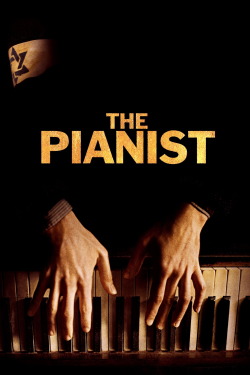
Review of The Pianist (2002) by Huseyn B — 03 Oct 2012
Someone feed this Roman Polanski seems cold and emotionless, but these definitions are unfair. Rather, that his picture as objectively as can be nesubektivnym people have personally experienced the horrors of war and the Holocaust. It concerns not only the main character, Wladyslaw Szpilman Polish musician, who miraculously managed to survive in a terrible era, and died at the age of 88 years before the filming of "Pianist" based on his memoirs. After all, Roman Polanski - perhaps the first of the world-class directors, who only at the end of the seventh decade of his life decided to appeal to what he knew was not hearsay and experienced, as they say, in their own skin. He is as incomprehensible escaped the tragic fate of his parents perished in a concentration camp, and, having got out of the Krakow ghetto, in hiding in the countryside.
But even those who do not know the facts biographies Polanski could expect from the director of the famous horror films, tapes and mystical thriller, perhaps, something frightening, anxious, nervous and exciting. Therefore the beginning of "The Pianist" is necessarily common, ordinary, devoid of any expression, not to mention keyed manner. Despite the decision to film in color (Visiting Polish operator Paul Edelman has previously worked with Andrzej Wajda on the films "Nastasia" and "Pan Tadeusz"), breaking the tradition of newsreel like black-and-white movie, stated the same Wajda in "Korczak" and Steven Spielberg's "Schindler's List," Roman Polanski is not immediately and seemed to effortlessly achieve "everydayness of narration." And this is the worst! When the day-to-day, in between times, in a hurry and without explanation some people dressed in German or in special uniforms for the "Jewish policemen" (it turns out that there were some!), Humiliated, beaten, shot others only for what they are - the Jews, it works in the end, a lot stronger than the exaggerated pathos of passion on the total destruction of the Jewish nation unhappy.
And the title character behaves not as a direct participant in the events, but if the witness who observed a little from everything that happened. He - a kind of architectural mediator, something likened to a movie camera is stamped on the film that gets in its lens. By the way, this is not just pointed in elected angles filming when Wladyslaw Szpilman watches doeth "everyday horrors" through a narrow opening or through the edge of the window, especially in those scenes where he's hiding in the illegal apartments.
And here, by the way, first detected a clear roll "Pianist" with one of the key works of the "old Polanski" - namely, "to tenants," where the director is not by chance he played the title role of a Kafkaesque type, slowly going mad in a rented apartment in rather poor district of Paris. Since both Szpilman, who remains almost alone in the last third of tape and trying to survive in this world in spite of reasonable argument, which is still not live, can not be saved because, after all, and others died for no reason at all, he becomes like a ... Robinson Crusoe on a desert island, clinging to life last strength. And in contrast to the weak-willed and depressed Trelkovskogo from "Lodgers", which, above all, becomes a victim of his own doubts and suspicions about the world around them, the hero of "The Pianist" survives thanks to the belief that I should not, did not disappear right before laid over the period. And that word is not even expressed his belief gives him the kind of music, from which the pianist was excommunicated in force for several years.
A kind of "no torture music" is best expressed in the episode when Wladyslaw Szpilman, after a very long break for the first time is about piano, but can not play for reasons of secrecy, so that forced a finger in the air without dropping them on the keys - but in his thoughts (and over) the music of Frederic Chopin. And salvation comes to the pianist did not when the Germans leave Warsaw, which burst into the Soviet army, and at a time when it accidentally discovered by the German Captain Wilm Hozenfeld allows you to play the piano. The rest - not silent, but the music, as if in defiance of the final phrase of Shakespeare's characters, solve a nagging question "to be or not to be.".
Tenant to remain in this world, sometimes it is difficult and almost impossible, if the person did not own a mission, which consists for him in the works. This man is alive. So Roman Polanski made a film not about the "art of survival", and through the art of survival. In the end, the fate of himself and miraculously kept in order to make the most of this talent in the field of cinema.
This review of The Pianist (2002) was written by Huseyn B on 03 Oct 2012.
The Pianist has generally received very positive reviews.
Was this review helpful?