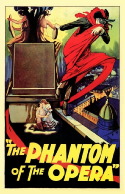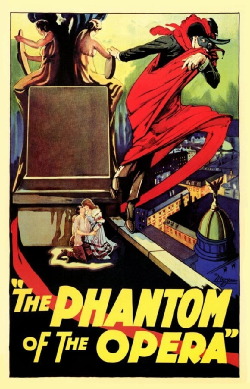
Review of The Phantom of the Opera (1925) by Kerry H — 21 Jun 2010
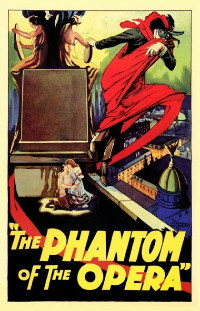
This is the Great Grand-daddy of them all, the one that began Universal Studios reign as the House of Horror. 85 years later, this Phantom is still THE Phantom. But how has it held up? Well...so-so.
Lon Chaney's performance is, without question, remarkable. He performs the first half of the film behind a mask, and yet the viewer is able feel the strength of his character through the quality of his movement. (It is said that Chaney designed several different masks for the film, each with a slightly altered expression, in order to convey the correct emotional context for the Phantom.) Once the Phantom is unmasked, Chaney's performance takes on a whole new energy.
Mary Philbin is fine as the pretty young soprano of the Paris Opera House, but the rest of the cast is absolutely uninteresting. The performances suffer from the tendency in silent films to over-emphasize every movement and expression, and there is some ill-conceived "comic relief" early in the film. Once the action focuses on Chaney and Philbin, however,the movie transcends its limitations.
The masqued ball scene is a particular standout for sheer spectacle. The intricacy of set design, costuming and choreography are all on display here. On the disc that I own, a re-release from 1929 is included that has this scene colorized. (The scene was colorized in 1929, not in Ted Turner's "crayon" period of the late '80's.) The re-release also has much of the footage in much better detail, although the running time was drastically shortened, modifying the plot somewhat.
This review of The Phantom of the Opera (1925) was written by Kerry H on 21 Jun 2010.
The Phantom of the Opera has generally received positive reviews.
Was this review helpful?