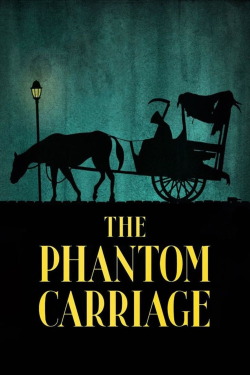
Review of The Phantom Carriage (1921) by Terry D — 06 Feb 2015
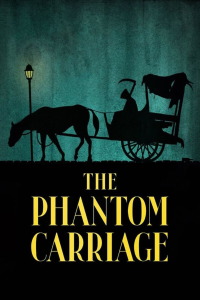
"Körkarlen (The Phantom Carriage)" is a masterpiece work of the silent era, or really any era, by Swedish film auteur Victor Sjöström. Based on a novel by Nobel Prize-winning (and fellow Swedish) author Selma Lagerlöf, the plot concerns an old Breton legend (it postulates that the last person to die on New Year's Eve before the clock strikes twelve is doomed to take the reins of Death's chariot and work tirelessly collecting fresh souls for the next year) and follows an alcoholic, abusive ne'er-do-well, David Holm (Sjöström himself) and the pure-of-heart Salvation Army sister, Edit, who believes in his redemption.
The narrative structure, mise-en-scène, cinematography, innovative special effects, and acting are all shining examples of cinema par excellence. Interestingly enough, the double/multiple exposure technique employed by Sjöström to effectively present the eponymous carriage and those persons who are now on the 'other side' of the mortal curtain came to be seen by some latter-day critics as a conventional apparatus of the time that was overused by the director, but in defense of Sjöström, it is in no way used as a gimmick - the effects beautifully fit the story and the scenes and subjects actually look exactly like they're described in the novel.
One of the trailblazers of his generation and an inspiration to countless filmmakers in this wake, Sjöström ended up being a literal father figure to fellow countryman Ingmar Bergman, who ended up casting him in two of his own films late in the former's life, most notably "Wild Strawberries", a Bergman masterpiece and Sjöström's final film appearance.
Thematically, there are clear and nifty parallels between "The Phantom Carriage" and Charles Dickens' "A Christmas Carol" (as there will later be in "Wild Strawberries" along with nods to "The Phantom Carriage") centered around Holm being forced by his ghostly predecessor to revisit 3 key episodes of his life that have highly impacted and shaped his present, although I daresay in darker style here.
Many scenes leave their mark. Two chilling ones in particular registered highly with me - 1.) After waking in the Salvation Army shelter and finding out that Sister Edit meticulously repaired his battered coat overnight Holm quite shockingly and savagely rips all of her alterations asunder, and 2.
) In a fit of rage after his wife has locked him in the kitchen Holm grabs an axe and proceeds to hack through the door, eventually peering through his crudely-fashioned hole in ominous fashion before unlocking the door and escaping, in the meantime his wife has fainted from terror (this scene is recreated in almost mirror fashion by Stanley Kubrick and Jack Nicholson in "The Shining").
Overall, 95 years after it was made, "The Phantom Carriage" remains an impressive achievement in the history of film and an emotionally affecting one that leaves a deep and indelible impression.
This review of The Phantom Carriage (1921) was written by Terry D on 06 Feb 2015.
The Phantom Carriage has generally received very positive reviews.
Was this review helpful?