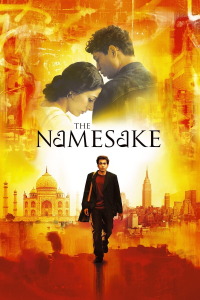
Review of The Namesake (2006) by Fazley A — 20 Nov 2011
The movie The Namesake is a film by Mira Nair and is adapted from a novel. It is portrayal of a family who moves from one culture to another, therefore creating a question of identity for their future generations. It is a beautiful and heartfelt look into the significance of a name. The scene shots were amazingly beautiful, and the contrast between one place and another creates a certain emotional distinction that parallels the story.
Ashoke Ganjuli is the father who goes back to India in order to marry Ashima in a traditional Hindu wedding ceremony. Shortly after the ceremony, they move back to Queens, New York and begin the process of integrating their family with their own eastern traditions into a western world.
One of the major points of the movie comes from the naming of their son. They name their son Nikhil, but his nickname is Gogol. As Gogol grows up in America, he is the object of ridicule throughout his school days, not only because of his unusual name, but because of his unusual upbringing due to crossing cultures. Gogol tries to do the things that a born American would do such as choose his own mate. When he begins dating an American girl, his parents do not approve. They want him to adhere to the Bengali tradition of mating within his own race. Gogol's struggle against his traditional Hindu upbringing and his desire to follow his American born dream is a constant theme throughout the movie. In the end, when his father dies, he realizes the beauty of tradition and family, thus leading him to a different point of view.
The movie is called "The Namesake" because there is significance in Gogol's name. Gogol's father explains this in a story of one time when he was reading a book by the famous Russian author Gogol. While reading the book and talking to another passenger on the train, there was a tragic train wreck, and before dying, the passenger suggested to Ashoke that "life is too short" and that he should live each day like it was his last. This was the major motivating factor in the way Ashoke lived his life as one of the only survivors of this tragic accident. This was why he chose to move to America to raise his family instead of India. It is only later that Gogol's father shares this story with him, which helps to give him some understanding of his father's motivations and desires.
The movie displays many traditional Hindu aspects. The movie starts with the beautiful scene of an arranged marriage between Gogol's parents, and later, it also shows the marriage of Gogol. Also, Gogol's parents are shocked to find that they have to name their baby before they leave the hospital, because it is traditionally the grandmother who would name him if they were in India. There is also a question of cross-cultural mating, and in the movie, the burial scene adheres to the traditional Hindu burial rites of floating the dead down the sacred Ganges River. Throughout the film, there is a strong connection to family and traditions as described by Hinduism. Also, throughout all of these ritual ceremonies, the people display the traditional puja. This movie is a good example of what it means to be Hindu. I highly recommend this film.
This review of The Namesake (2006) was written by Fazley A on 20 Nov 2011.
The Namesake has generally received very positive reviews.
Was this review helpful?