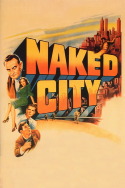
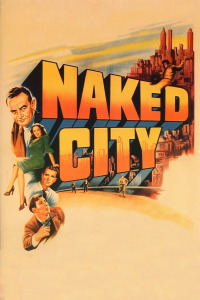
Review of The Naked City (1948) by Pera K — 26 Jun 2009
Modern film-goers take much for granted - our cinemas are so packed with high-octane exercises in special effects and pyrotechnics that an explosion or two seems to be a guarantee for the price of a ticket. But, in a limitless world of film, it's easy to overlook some of the great advancements in cinema history. "The Naked City", directed by Jules Dassin, is an important film in that it's credited as one of the first to ever use all on-location shooting. Prior to it's release, most films would be shot in controlled environments to overcome issues such as sound recording - location shooting was awkward, and a bit of a last resort. The effect is a documentary-style look at New York, a love-letter so romantic that it's as if Woody Allen lended his efforts to this standard police procedural.
The film is narrated by producer Mark Hellinger, who died before the film was released. He tells us that this is a film unlike anything we've seen before (we've seen plenty since). We get short vignettes of city folk - from radio DJ's to street sweepers, and finally we get another glimpse into the life of a woman being murdered. We see the two criminals drown her prior to one of them killing the other for being an unreliable drunkard.
Lieutenant Dan Muldoon (Barry Fitzgerald) is the veteran detective assigned to the case alongside an upstart, James Halloran (Don Taylor). The plot unfolds like every episode of a television crime drama you've ever seen - the wily detective tracks clues, follows leads that take him nowhere, and interviews suspects who can't get their stories straight. One of them is Frank Niles (Howard Duff), a spoiled son who blatantly lies to Muldoon and is called out on it. While Muldoon is fixed on Niles, Halloran begins his own sort of investigation that leads him to a former professional wrestler by the name of Garzah (Ted de Corsia), a thug with a criminal record.
The performers who stand out are the two villains, Duff and Corsia. Duff, playing a criminal in-over-his-head, is convincing and, as oblivious and flat-out stupid as he is written on the page, he retains some level of believability. Corsia is larger-than-life, an intimidating figure with a tremendous presence on screen. The confrontation between Garzah and Halloran in Garzah's apartment is one of the best of the film.
Although the plot may have been unique for it's time, we've seen similar police procedurals hundreds of times since this film's release. That being said, however, it's still a highly worthwhile picture for some beautiful cinematography (including a stunning chase sequence in the finale) and a cleverly constructed script.
This review of The Naked City (1948) was written by Pera K on 26 Jun 2009.
The Naked City has generally received very positive reviews.
Was this review helpful?