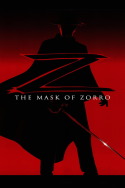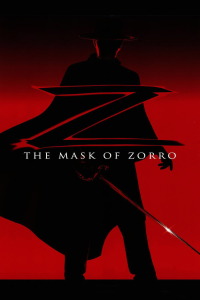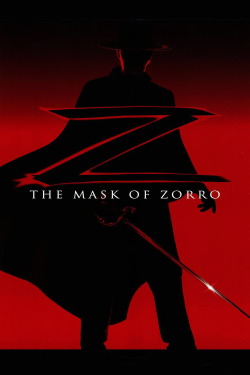
Review of The Mask of Zorro (1998) by Van R — 28 May 2010
Like The Lone Ranger, he wears a mask to conceal his identity. Like Batman, he hides his crime busting regalia in a secret place. Like The Phantom, he rides a spirited stallion. His wizardry with a bullwhip rivals Indiana Jones. He sports a cape like Superman. Like The Shadow, he is a wealthy gentleman who leads a highly visible public life and shuns violence. Like James Bond, he exudes enough debonair charm to leave the ladies swooning. Named after the elusive fox, he is Zorro! Zorro lives to thwart injustice, corruption, and tyranny. Watching "GoldenEye" director Martin Campbell's classy but drawn-out swashbuckler "The Mask of Zorro" with Antonio Banderas, Anthony Hopkins, and Catherine Zeta-Jones, you'd think Zorro was a cross-section of those heroic crime busters. Actually, you'd be mistaken. The creators of "The Lone Ranger, Batman, Superman, The Shadow, Indiana Jones, and James Bond drew their inspiration from Zorro.
For the record, Canadian born novelist Johnston McCulley created the Zorro character in 1919, and the Hispanic hero made his first appearance in the serialized story "The Curse of Capistrano" in "All-Story Weekly," a the pulp magazine. Like a good legendary crime buster movie, "The Mask of Zorro" encapsulates Zorro's motivation. The affluent Don Diego de la Vega (Anthony Hopkins of "Instinct") resorts to mask, cap, sword, and whip to defend the helpless, put-upon peasantry. Scenarists John Esckow, Ted Elliot, and Terry Rossio have written "Zorro" as if it were an old-fashioned tale. Audiences must pay attention to their multi-dimensional storyline to appreciate the intricate, elaborately woven action. Moreover, director Martin Campbell translates the scripted word into cinematic verse. "Zorro" emerges as such a literate action yarn that you may find yourself enjoying it equally for its mental as well as physical stimulation. The only hitch to "Zorro" is that Campbell and his writers never know when to stop. "Zorro" is a runaway horse, not that it matters much. "Zorro" is one of those movies where each scene contributes to the headlong momentum of the story. What a lot of people may miss after they finish watching "Zorro" is that "Zorro" is a tragedy wrapped up in a romantic adventure.
Consider the splendid introductory gambit. In 1821, villainous Spanish Governor Don Rafael Montero (Stuart Wilson of "Lethal Weapon 3") faces exile. Before departing, he devises one last trap to capture Zorro. Decked out in black as 'the fox,' Don Diego takes the bait. He rescues three innocent peasants from a firing squad, and then eludes an army of Don Rafael's bumbling troops. Swinging gallantly around on his handy bullwhip, Zorro pauses on Rafael's balcony and carves a Z into his throat. Framed in a heroic sunset, Zorro gallops home to tell his baby daughter Elena about his exploits. Later, Rafael shows up without warning at Vega's hacienda. Opening a wound that Vega acquired at the execution, Rafael unmasks Vega as Zorro. A fight ensues, and a cretinous soldier accidentally kills Vega's gorgeous wife Esperanza (Julieta Rosen of "Perfect Target"). Don Rafael had lusted after Esperanza, so he furiously impales the poor soldier on his sword. Not only does Don Rafael imprison Vega, but he also abducts baby Elena! Indeed, "Zorro" features a dastardly villain that you can truly boo-hiss!
Twenty years elapse, and Don Rafael returns to California. He proposes a daring scheme to steal California from Spanish General Santa Anna by selling it to him for secret gold stashed in a nearby Spanish mine. Cleverly, Rafael enlists the aid of the greedy landowners. The ghost of Zorro/Vega still haunts Rafael, so he scours Mexico's smelly dungeons to find Vega. Rafael fears that Zorro may thwart his plan. Vega manages to escape during Rafael's inspection when his fellow inmates step forward to claim Zorro's identity.
Genuine class distinguishes Zorro from his cinematic competitors. The smoothly handled violence is never gratuitous and rarely profane. Best of all, the swordplay is elegant but stimulating. This is the first good example of saber-slashing since director Richard Lester made "The Three Musketeers" and "The Four Musketeers" in the 1970s. "Zorro" constitutes a lively throwback to the way literate adventure sagas were produced. Indeed, director Martin Campbell revitalized James Bond in "GoldenEye," and "The Mask of Zorro" resembles an elaborately plotted, often indulgent 007 epic where story matters as much as action. In an opening similar to the Bond franchise, Zorro marches on screen. Whipping out his sword, he slashes a huge signature Z with three broad, swift strokes. Flames engulf the screen and the narration begins. Although the body count remains comparably low, "The Mask of Zorro" should keep action-oriented guys of all ages satisfied women will gravitate to "Zorro" for Hispanic hunk Antonio Banderas. Banderas performs his sword fighting chores credibly enough, and he gets a couple of chances to woo Elena. Reining in the sexuality to obtain a PG-13 rating, the filmmakers rely entirely on Catherine Zeta-Jones' modesty and pulchritude as the adult Elena. Essentially, Jones displays only cleavage. She has no nude scenes. She engages Zorro in an entertaining sword fight scene in the stables as well as an erotically charged dance number.
Periodically, "Zorro" pokes fun at its hero. While the filmmakers have fun at the expense of Banderas' "Zorro," they succeed in making Zorro both human and sympathetic. "Zorro" loses a modicum of its spontaneity to its cumbersome length and its overwritten script.
Indisputably, "The Mask of Zorro" ranks as Z-best Zorro movie since Twentieth Century Fox's "The Mark of Zorro" (1940) with Tyrone Power. "Titanic" composer James Horner provides stirring, toe and heel tapping Spanish music that enhances both the action and the atmosphere. Thankfully, "The Mark of Zorro" is one summer movie without a succession of heavy metal, hip-hop, rap, or country music tunes decimating the end credits. If performance and plot matter in your choice of action adventure films, "The Mark of Zorro" qualifies as ideal entertainment.
This review of The Mask of Zorro (1998) was written by Van R on 28 May 2010.
The Mask of Zorro has generally received positive reviews.
Was this review helpful?