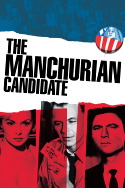
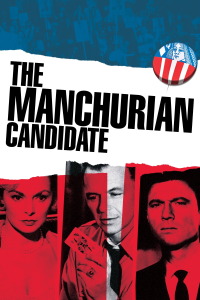
Review of The Manchurian Candidate (1962) by Darik H — 07 Apr 2008
The foremost thing I have to say about The Manchurian Candidate is that it is, at times, a surreal film. This is meant, however, on multiple levels. While there are parts of the film (the dream sequences, particularly) where cross-cutting and juxtaposition create an uneven and jarring reality completely intentionally, it is the moments of lucidity that I often found most bizarre (particularly the ones involving Janet Leigh).
Apart from this, however, the Manchurian Candidate is an intriguing, if overly long, political thriller that, while it takes far too much time to explain its premise and is often overly blunt in its portrayals, still manages to involve the viewer right up until the emotional and thought-provoking ending.
In the film, Frank Sinatra is Korean vet Ben Marco, who is having nightmares about the days he and his platoon went M.I.A. While he claims to remember that a fellow soldier, Raymond Shaw, fought off an enemy troops and saved the surviving men, his dreams are telling him that they were captured and brainwashed, and that Shaw had been programmed to kill two of his own men.
Desperate to discover what happened to him and his platoon, Ben tries to get in contact with Shaw to see what may have been done to him... and to try to discover who is behind the whole cover-up. Frank Sinatra as Ben Marco doesn't give a bad performance, exactly.
.. it just wasn't all that great. We see Marco as a military man, whose whole life revolves around being in the service, but beyond that nugget of information, we've got nothin' on him (well, he is a smoker, but then again, wasn't everybody in the sixties?).
Sinatra makes the role believable- as in, you don't say "Wow, that guy is a lousy actor" during the film- but he never really pops as a character of his own; he's just... a guy. We get exactly the opposite problem with Raymond Shaw, as played by Lawrence Harvey: at first, Shaw comes off as a stereotypical snobby asshole, complete with a British accent that is never explained, and for the first half of the film, it is hard to feel much but disdain for the guy.
However, halfway through the movie, the character actually starts to develop, as we see that Raymond isn't a jerk entirely by choice- he's been forced to give up everything he loves by his controlling mother, and it's his lack of freedom that turned him into the man he is.
As the film goes on, his character garners more and more pathos, until, at the climax of the film, we truly feel deeply for Raymond and the tragedy that his life was forced into becoming. Though Raymond is molded into the shape of a monster by the evil Communists (and what a mustache-twirling bunch they are), we soon see that the real monster of the story is Mrs.
Iselin (played by Angela Lansbury), the wife of (and brains behind) the oafish Senator Iselin and ruthlessly domineering mother of Raymond. This woman has to be the most despicable character I've yet seen on film (at least, she was to me)- we see that through her insatiable political ambition and her manipulative force of will, she had broken down Raymond's will long before the Commies ever got their hands on him.
The irony and hypocrisy of the character just makes her loathsome to my tastes, and it doesn't help that Lansbury gives a dead-on portrayal of a shark in mother's clothing. Also in this film is Janet Leigh as Eugenie Rose Chaney, a character that serves NO PURPOSE WHATSOEVER save as a sounding board for Sinatra.
Literally, there is ONE SCENE in which the two meet and have a conversation, which ends with her giving him her ADDRESS and PHONE NUMBER, and then after that, she's an expositional tool, nothing more.
THAT, my friends, is just sloppy writing. In fact, quite a few moments struck me as being poorly written, whether it was because the dialogue just didn't sound natural, or because there was too much of a reliance on coincidence to move the plot forward (the bartender says the EXACT WORDS that start Raymond's trance? Jocelyn Jordan just HAPPENS to wear a red queen costume to the Iselin party?), but at the same time, there are some good, solidly written moments, too- which leads me to believe that the book is much, much better, and the movie just applied some standard Hollywood conventions to shorten the narrative to feature length.
The shot compositions are great, I will say, and the lighting, as well; there's a dark, shadowy tone to certain parts of the film that really jumped out at me. The editing was phenomenal, particularly during the climax, and also in the aforementioned dream sequences, which jump between hallucination and reality so quickly sometimes that it's hard to sort out which is which, while at the same time presenting a cohesive, comprehensible scene.
While it has a few problems on the scripting side of things, the Manchurian Candidate is nevertheless an intricate, suspenseful thriller that gets more and more arresting as it goes on, culminating in a fantastic conclusion that will leave you thinking about it long after it's over.
Sure, the Communist themes are now dated and somewhat antiquated, there's real power in its message about the loss of freedom, the manipulation of the masses, and the theft of one man's soul.
This review of The Manchurian Candidate (1962) was written by Darik H on 07 Apr 2008.
The Manchurian Candidate has generally received very positive reviews.
Was this review helpful?