Review of The Magnificent Ambersons (1942) by Thomas W — 14 Aug 2013
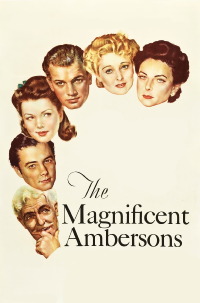
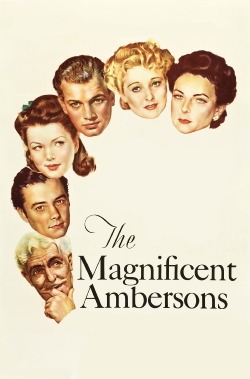
Orson Welles' follow-up to his immortalized masterpiece Citizen Kane was released in 1942 with much rabble rousing and fall out amongst the scrupulously thorough director and RKO Studio powers-that-be who did not see eye-to-eye on the film -- there have been rumored reasons as to why for decades now.
Ambersons was released without the full support and endorsement of its director as the studio had decided to edit and cut the film to a much shorter runtime (40+ minutes of film were rumored to have been cut) they deemed acceptable while also reshooting a more up-beat and happy ending that remained truer to the film's source material, a 1918 Pulitzer Prize-winning novel by Booth Tarkington of the same name.
What was left out of the final production has mostly been unknown (although the original script has turned up over the years) although it was enough to upset and infuriate the talented and meticulous visionary for years which created a long-standing rift between him and the studio.
It is mostly the story about the lives of the members of a proud, "Old Money" Midwestern family with a respectable name but a failing fortune during a drastically changing society and era in America due to the dawn of the automobile.
The central story is about Isabel Minafer née Amberson (Dolores Costello -- Drew Barrymore's grandmother) who had declined an offer of marriage -- over twenty years ago -- to a man she loved, the near-penniless Eugene Morgan (Joseph Cotten - Citizen Kane, The Third Man), as both her family and society viewed her relationship with Eugene as improper.
Years after the two went their separate ways Isabel accepted a marriage proposal her family approved of from the very wealthy but passionless Wilbur (Don Dillaway - Platinum Blonde). The loveless marriage produced a child named George (Tim Holt - Treasure of the Sierra Madre) and as the parents struggled to show affection they tried to buy his heart and love instead -- which resulted in a spoiled living terror whose name and fortune kept him from ever being responsible for any of his actions.
When the now-widowed Mr. Morgan and his beautiful daughter, Lucy (Anne Baxter - All About Eve, The Razor's Edge), return to town some twenty years later, he has become excessively rich because of automobiles.
It is a cruel hand of fate that makes George take a quick liking to Lucy and an instant loathing of her father as George has been brought-up (by his father) to resent "new money" that has resulted from the industrialized Automobile Age that has changed societal norms and enabled a growing middle class.
Adding to the perplexities of the story, Isabel's husband dies and jealous George soon learns (via his Aunt Fanny [Agnes Moorehead - 'Bewitched', Pollyanna) of the relationship once shared between his mother and the man he now loathes.
This is merely (just) a part of the film as the movie is far-reaching and is an examination of changing society and the roles people play in one another's lives. It poses a variety questions about love, morality, family, control and deception and the destructive nature of jealousy.
It ponders industrialization and critiques irresponsibility. There is a lot to absorb in The Magnificent Ambersons. Even without Welles' full support, I find The Magnificent Ambersons to be properly titled as I believe it is a magnificent motion picture.
This review of The Magnificent Ambersons (1942) was written by Thomas W on 14 Aug 2013.
The Magnificent Ambersons has generally received very positive reviews.
Was this review helpful?