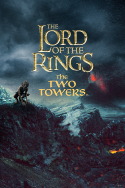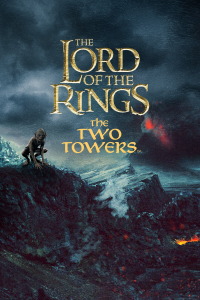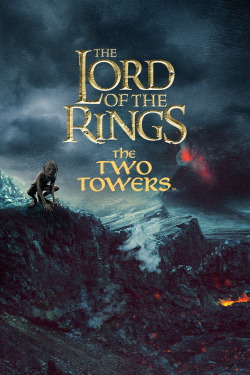
Review of The Lord of the Rings: The Two Towers (2002) by Swati — 04 Dec 2013
This is where the story gets interesting. While Frodo and Sam continue on their separate journey to destroy the ring, Aragorn and the rest are caught in the battle to defend Rohan against Saruman's orcs. They choose to stay and help them. In other places we are introduced to talking trees called Ents.
The first two hours has more travelling as the characters struggle to reach places they need to be, often confronted by orcs or other men, and even the land itself. The people and culture of Rohan are introduced. Some new characters are introduced, the most interesting among them Eowyn, her brother Eomer, and Faramir. They are woven into the main story seamlessly. In fact I would have loved to watch Eowyn given a bigger role, seeing that there are no female major characters in the story.
This is also the instalment where we get the full dosage of the creature called Gollum. As interesting as he is when interacting with other characters in his queer manner, he is more intriguing in his monologues where he converses with himself, in a split-personality, between his two identities of his former somewhat sane self Smeagol and the villain Gollum. Andy Serkis is one hell of an actor. All his movements and expressions bring to life a character unprecedented in the history of cinema. The CGI used to create him does an incredible job in making him seem like a real creature roaming around the human-like characters, and it makes for a fun yet a piteous sight.
Gandalf comes back stronger than ever. He was my favourite character from the first movie, but is outshined this time around by Aragorn, against whom everyone is a minion in stage presence. The latter becomes quite a legend in the extended version when a bit of his past is discussed.
The main battle sequences are much more satisfying as Aragorn, Legolas and Gimli take a leading part in the fighting. Rohan defends itself by sheltering inside their fortress, Helm's Deep, while the orcs lay siege and charge repeatedly. All the rest shall have to be seen to evoke the full emotional impact. In the tradition of most epic films, Saruman the second-in-command is the main villain for this instalment. Sauron is the one behind pulling the strings.
People who may have had problems with Fellowship regarding the character development of characters such as Legolas and Gimli need not worry, because while they only come onscreen after an hour and a half in Fellowship (there was a lot of other stuff going on with the Hobbits, Gandalf, Aragorn and the Ringwraithes for us to even begin to think about anything else), they were there from the start in The Two Towers. They have larger roles and kill more orcs.
Despite everything, this movie felt as a continuation of an on-going tale and set up the next instalment when it ended. I would have held it against it if Peter Jackson hadn't done such a wonderful job bringing such magic to his version of Middle Earth. I believe that with minor tweaks, if it hadn't been the requirement of the story and this movie had been separate from the trilogy, it would be hailed as among the finest pieces of cinema in the genre of fantasy. But when discussing the greatest movies, I believe a film should qualify on its own merits. I must hold it in comparison against a great film from another franchise, The Empire Strikes Back (though it cost The Return of the Jedi in story), and come to the conclusion that it just missed the mark of greatness. Having said that, there were some sequences that were more memorable that any in the other instalments. One of course is the defence of Helm's Deep, for its ingenuity in the field of battle and tactics in general; the other are the scenes with the Gollum, who had a longer screen time than he had in The Return of the King.
It was well acted all around. The cinematography was up to the highest standards held by Jackson. The special effects as always couldn't have been better without ruining the effect and look. The score sounded better than ever.
This had to be the lesser of the three films, because as most trilogies go, the middle instalment is more often than not a chance to develop the characters and introduce new conflicts, and cannot function independently as the first instalment can, which is why the latter are often more liked than the sequels. In one regard in which it did a better job than the first movie, is it gave the orcs some semblance of dialogue, so while the illusion of their just being war-mongering brutes is not shattered completely, it still presented them as beings capable of thought and some reason.
I had a lower regard for The Two Towers, which was a disappointment to a certain degree, until I watched the extended edition which includes some light hearted moments and develops some secondary characters like Eowyn and Faramir significantly. This, among other things, turned my score from a generous 9 into a well-deserved 10; and tilted my preference in favour of The Two Towers over The Return.
This review of The Lord of the Rings: The Two Towers (2002) was written by Swati on 04 Dec 2013.
The Lord of the Rings: The Two Towers has generally received very positive reviews.
Was this review helpful?