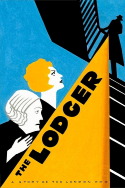
Review of The Lodger: A Story of the London Fog (1927) by Anton B — 05 Jun 2010
This is only the second silent film I've ever seen, the first being Chaplin's wonderful City Lights. Like that film, this one again proves to me that I, like many people my age, even those interested in film like myself, really ought to go back and watch silent films; they're the purest form of moving pictures, unaccompanied by dialogue or sound effects, but remaining, at least in these two cases, brilliant works all the same. They demonstrate better than anything else can how to tell a story visually, and with substance and subtlety, and that's a lesson I think even a lot of popular filmmakers today still need to learn.
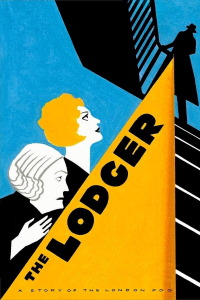
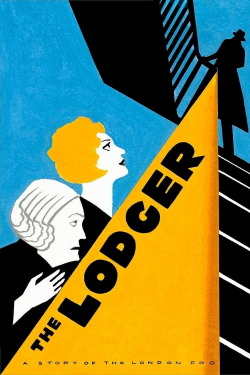
This film starts with the shocking murder of a beautiful golden-haired girl at the hands of a serial killer calling himself The Avenger. From here, we follow another similar looking young girl named Daisy (June) to her parents' lodging house. Soon, they take in a mysterious stranger, the titular Lodger (Ivor Novello), who closesly matches the only description of the killer. From here, the suspicion that he is in fact the murderer grows stronger and stronger, as he takes down all the portraits of women in his room, suggestively brandishes a knife in one scene and a fire prod in another at Daisy, and his general moody, secretive behavior. The tension builds and the suspicion becomes clearer until the Lodger is finally arrested, and from there, we finally learn his secret reason for seeking out that particular house, leading to the film's gripping conclusion.
Novello was the most fascinating to watch in this film. He communicated so much with his facial expressions; he captured perfectly the ominous darkness of a potential killer, the distraught vulnerability of a lonely man finding joy in a new acquaintance, and the hopeless confusion and martyrdom of a man wrongfully accused with nowhere to turn. All without speaking. The policeman in the movie, Joe, played by Malcolm Keen, also did a fine job, turning his character from a jerky bonehead to a guy you almost feel sorry for as he's completely shut down by Daisy just because he's trying to do his job, even if he is simultaneously serving his own purposes in doing so.
The music in the film was quite good, as well. However, I'm not sure which score I watched the film with; the copy of the film I have is part of The Hitchcock Collection, produced in 2005 by St. Clair Vision, and I can't seem to find out which music this release has. In any event, I thought that other than a couple of moments where the music seemed a bit too light-hearted for the action on-screen, it worked well to bring out the emotions conveyed by the actors.
I've only seen about half-dozen Hitchcock films that I can claerly remember, all of which were made much later in his career, but even with that being the case, this film is a clear indicator, thematically and visually, of his later work. Focusing on the macabre, fueled with passion and suspense, and sprinkled with decidedly modern, artistic shots (such as the scene where Joe sees various scenes from the film in a watery footprint as he mulls over his Lodger-is-the-killer theory). And it almost goes without saying this film featured a wrongly accused man and a penchant for gorgeous young women, both staples of Hitchcock's work.
This review of The Lodger: A Story of the London Fog (1927) was written by Anton B on 05 Jun 2010.
The Lodger: A Story of the London Fog has generally received positive reviews.
Was this review helpful?