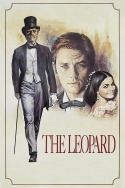
Review of The Leopard (1963) by Mark B — 29 Oct 2004
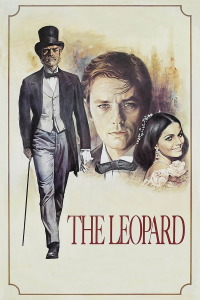
The book "The Leopard" is deemed by most to be the great Italian book of the twentieth century. The popular reverence accorded to it is akin to the way Americans uphold "The Great Gatsby". So, when director Visconti wanted to adapt it, he faced a formidable challenge, that of turning a justly famous book into a film equal to its source. He succeeds as well as any man could be expected to, and much better than Coppola with "Gatsby".
Adequately understanding what is going on this book/movie takes some background on both history and author. The author, Giovanni Tomasi de Lampedusa, was a great Sicilian aristocrat at the end of the 19th century through to his death in the 1950's. He read voraciously in all world literatures, but held off on writing until the end of his life, when he though his own life could inform the tale of "The Leopard", about the decline of an aristocratic man and family at the dawn of a new era. For Lampedusa, the old aristocratic life was fading away in the face of a unified, democratic, modern Italy. Compounding it was the fact that he had no biological heirs and was thus the literal end of the family line.
However, with his novel, he moved the clock back about one hundred years, and placed it smack in the middle of the 'unification' of Italy. Whereas we now think of the boot as one homogenous whole (witness Italian dressings and Italian style dominating the aisles of the supermarket....etc.) but this is a recent phenomenon historically. Until 1870, and indeed for some regions, about 1920, what we consider to be Italy was split into dozens of litte jurisdictions. Some were ruled by the Austrians, others the French, others the Pope, and still others by autonomous princes. For centuries, the country, especially its southern island Sicily, had been ransacked by invaders and occupied by a rotating cadre of foreign powers. These include in ancient times the Greeks, then the Romans. With the fall of the Roman Empire, the Arabs, the Normans, various German tribes, the Spanish, the French, among others had carved out a portion of the boot and called it its own.
It took until 1870, when Garibaldi, leader of a group of troops dedicating to 'unification', and his king Victor Emmanuel to finally kick out the foreigners and establish a single Italian government. Before this, Italy and especially Sicily had been continuously occupied by outsiders for over a thousand years. If you count the Romans as foreigners, then Sicily had been ruled from outside for over two thousand. And if you saw the Garibaldi coterie as foreign (and indeed, they were from two thousand miles to the north) then they are just the latest iteration of rule from without.
Back to the movie. In this context of the encroaching Garibaldi and new leaders lurks the proud aristocrat Don Fabrizio (Burt Lancaster in probably his best performance). The movie opens with a panorama of his immense lush palace and the whole entourage at prayer in the beginning. He deals with the minor matters of court until he is informed that Garibaldi has indeed landed, to bring the revolution to squalid, traditional Sicily. Don Fabrizio knows what this means: his time is coming to an end. His lifestyle is about to be replaced, and he cannot fight this change. Instead, he must adapt to it as quickly as possible to ensure some sort of survival for his family.
It is the consummately Sicilian approach: family and tradition are upheld over all else, to be adapted to the latest scourge from without. Whereas characters from Northern Europe would fight for an ideal or abstraction, , characters from the East for detachment, and Muslims for vengeance or honor, here the Sicilian fights for those ideals most important to him. And that means he must target the heir most important to him, arrange a marriage of some sort, and adapt himself to the new political order.
Making Don Fabrizio uniquely suited to this task is the fact that he is the embodiment of all the nobility could or should be. He is calm, cool, collected, educated, urbane, and commands universal respect. He calculates and is shrewd, well-mannered while not being showy, and uniquely warm to others. To watch him at work arranging marriages or debating the political course to take is to watch the sage at work, the man who fights on out of tragic engagement. It is my favorite type of character, and this is a particularly good rendition of the type. It is the 19th century counterpart to Chiwetel Ejiofor in "Dirty Pretty Things".
The stew he is stirring is something like this. The mayor of the town where they are summering is a man of low status but who has beautfiul daughters. Don Fabrizio has three daughters of his own, but they are all immature and of no particular beauty, complicating the matter of marriage. One of them, Concetta, falls in love with Fabrizio's nephew, the dashing Tancredi (Alain Delon) but he does not share her affections.
The Don decides that the realist Tancredi, who is fighting with Garibaldi, is the man on whom the family legacy rests. And he decides that a marriage between Tancredi and the beautiful Angelica (the amazing Claudia Cardinale) is the best bet for his family.
The scenes along the way of this marriage being brokered are terrific. We see the fact that Angelina's father, the ill-mannered and completely un-aristocratic Don Sedara, is no Don Fabrizio. He may have money, he may have power but this new Italian political leader lacks the class that Fabrizio so effortlessly projects. This then is the central metaphor for what will happen in the new Italy: the union of old aristocracy and tacky opportunistic new money. In this new world, Fabrizio knows his time has past. Whereas the aristocrats were once the lions and the leopards of the jungle, they have now been tamed and pushed aside. And with it, all of their great traditions.
The film conclues with an extended ballroom sequence where Fabrizio is supposed to celebrate the new marriage, but just turns into a depressed meditation on the mortality of his life and lifestyle. Against the festive atmosphere, we see Fabrizio ruminate on Sicily's long history and how it now faces a choice. But most of all, the lifestyle is one of renunciation, simple pleasures and other things that lie over a longing for death. With Garibaldi, they can either be woken up to realize their potential, or continue their new lifestyle while they slowly fade away. Compounding this is the fact that once, long ago, Fabrizio could have secured the charms of lovely Angelina and been a worthy groom to her. Now, he must turn that role over to his unworthy nephew and watch them squander all that he has built and maintained.
Finally, as he walks home from the ball, disspirited, he comes to a open abandoned piazza and wishes upon a star for a moment of certainty and stillness in this world. And that is his last wish as he walks off, with his time over and that of the new Sicily being ushered in.
What makes the film work so well is the strength of the central metaphor and the degree to which is adhered to and embellished on. The performances, the locations, the amazing attention to detail of the sequences and sets all just helps the realization of this metaphor. In choosing the right character and time to build upon, Lampedusa and thus Visconti know how to build a sturdy story that can stand up to various potential problems in the execution and emerge a terrific film.
ADDENDUM: I recently saw this on the big screen....it took on a life of its own. Every location seemed thrillingly opulent, inhabited, and beautifully photgraphed. Faces that are a blur on a small TV are rich on the big screen. Highly recommended to see this movie in such a way, much like Lawrence of Arabia.
This review of The Leopard (1963) was written by Mark B on 29 Oct 2004.
The Leopard has generally received very positive reviews.
Was this review helpful?