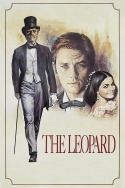
Review of The Leopard (1963) by Arshi R — 27 Mar 2010
The Greatest Films, a Review.
Grade: A+.
Getting overly emotional because of films content is not something that happens to me much, even in seriously heart string pulling moments of some films. Then, why, I ask, why, was I in such a state of overwhelming emotional highs and lows basically through the entire 3 hour length of this film; this is a film I needed to pause a few times just to recuperate myself. What is truly amazing, and masterful, was that the film didn't ask for my emotion, I simply cowered before it and had no choice but to relent. This is the most beautiful film I have ever seen. This is the best film I have ever seen.
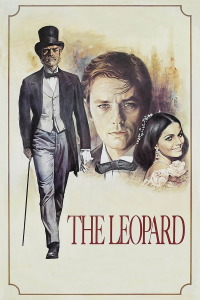
This is a film about The Prince of Salina, Prince Don Fabrizio Salina (Burt Lancaster). It's the 1860's, Italy, and the glory of his family is waning, as revolution spreads and a new monarch is formed. He has a large family, a wife and seven children; his main goals, however, revolve around hi s nephew Tancredi (Alain Delon), whom he sees as the embodiment of the change which is occurring. The Prince is the embodiment of so much that we cannot help but love him. The Prince has some hope that the change will not be so significant: "Things will have to change, in order they remain the same." He is the steward of the past, but he has fresh eyes for the way of the future. I love this character; he is so perfect, as a person, yet obviously has committed wrongful actions in his life. The Prince is 45, old for the time, and in this film he is simply salvaging his family's name, and paving the easiest transition possible for them in the future.
Burt Lancaster gives, in my opinion, the greatest performance ever as The Prince; at least that I have had the privilege of seeing. He isn't an actor in this role, not for one second. I would say his presence commands more respect than even Brando in The Godfather. Amazingly, all the characters feel so authentic, as do the settings and the style of visual representations, that the movie does not feel like a movie; it feels like we are witnessing the actual past, in all of its waning glory and changing of tides.
Giuseppe Rotunno shoots the most breathtaking images ever committed to film, his camera movement is flawless, at times the images are so striking you simply need to pause the film and take a breather. The landscapes are magnificent. Director Luchino Visconti's scenes of repeated prayers are like unstoppable and morally necessary interludes. One amazing scene in a church captures the Principle family members in all their aching magnificence, and we the viewer simply feel as though a myth is in our presence.
Religion plays a huge role in this film, and so sin, redemption, and confession do as well. One of the principle characters is the family priest, Father Pirrone, whom goes with the family on their perilous annual journey to their summer home and lands; I say perilous because of the ongoing revolution in the first part of the film. Romolo Valli is perfect in the role of Father Pirrone, and his scenes with The Prince are sentimental, serious, and universal.
The Princes Nephew Tancredi is fighting with the revolutionists. There is one battle scene in this film, and it's probably the weakest part of the film, and it is still done exceedingly well, better than anything in Gone with the Wind; which is still a great film. The war images have a realism to them, and the camerawork feels so natural and encompassing of the battlegroud. The same can be said for the rest of the film, the whole production has the feeling of being lived in, an uncanny realism.
Claudia Cardinale plays Angelica Sedara, the eventual love interest of Tancredi; this plot-line involves a "love-triangle" of sorts, because The Princes daughter is also in love with Trancredi (marrying cousins was not so rare it seems).
The final 45 minutes of the film is a big party, being held by The Prince for a man he despises, but is too smart to admit freely. This is perhaps the greatest 45 minutes in the history of film, unsurpassed in practically every meaningful way.
The only other films coming near this films mastery of epic scope are 2001: a space odyssey, and Andre Rublev; the latter I need to see a couple more times just to make definitive decision on. In terms of technical achievements in its genre's visual manifestations, perhaps it can be compared to only Barry Lyndon; however that just like comparing Platinum to 24 karat Gold. This film has more heart and personality than Barry Lyndon though, I must say.
The film is of a time long gone, when revolutions were legit, when a country over-ran itself. The film has heart because everyone in the film is born of the soil under their feet. A film of war today could not do what this film does. As war has become globalized, so too has it become impersonalized. The potential today for a war film with a true heart has been lopped off. This film is as monumentally mounted as the Tower of Babel itself, but its nostalgia alone, which reverberates through thousands of forgotten years, makes me weep for today, and pray for tomorrow.
This review of The Leopard (1963) was written by Arshi R on 27 Mar 2010.
The Leopard has generally received very positive reviews.
Was this review helpful?