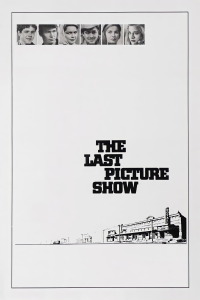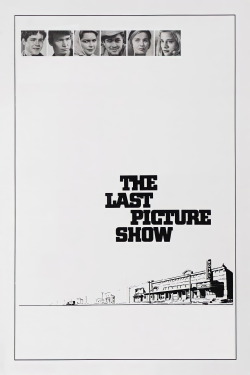
Review of The Last Picture Show (1971) by David U — 28 Dec 2005
[font=Trebuchet MS][i]Warning: spoilers within.[/i].
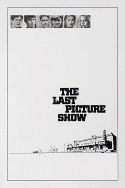
The title of [i]The Last Picture Show[/i] suggests something coming to an end, and, indeed, the "last picture show" does come near the end of the film, and is a fitting allegory for where our characters have reached. Set in a seemingly isolated little town in Texas called Anarene, where the school has it's own anthem which no one seems convinced in. Filmed in black and white, Peter Bogdanovich's elogaic little film could seem nostalgic, but the subject with which the film seems rather obsessed- sex- was just not discussed back in the 1950s, when the film was set, so [i]The Last Picture Show[/i] seems more like an unveiling of innocence. Set in the lull between the Second World War and the Korean conflict, our limited cast of characters is led by Sonny Crawford (Timothy Bottoms), a high school senior, and his best friend Duane Jackson (Jeff Bridges), who pass their multitude of time with two major interests: the movie theatre, and girls. Jacey Farrow (Cybill Shepherd) is Duane's steady girlfriend, and is described by Sonny as "the only good-looking girl in school"- and doesn't she know it. Sonny himself has been dating Charlene (Sharon Taggart) for a year, but she breaks it off on their anniversary because Sonny doesn't seem to care for this milestone.
The most involving plotline in the film arrives when the basketball coach asks Sonny to drive his wife, Ruth Popper (Cloris Leachman) around for him, and Sonny, maybe lonely, maybe bored, or maybe actually interested, shows an interest in her, and a rather awkward relationship develops. Leachman was given the Best Supporting Actress Oscar for her work here, and it's fully deserved- Ruth is a performance full of a immense loneliness, and you entirely believe the isolation, both physical and emotional, that this woman has been feeling since she was married about twenty years before. Bottoms is also excellent, mixing inexperience with blind desire, as well as an odd inability to become motivated. Sonny almost takes refuge with Ruth, feeling that someone finally understands him- yet, as he later shows, he doesn't really feel that other people would understand [i]them[/i].
Bridges is rather more ineffectual, but also largely natural, and it's admirable that he didn't try to gain himself more attention by overacting. His character- a sex-hungry, rather dim-witted teenager- is a bit of a stereotype, yet Bridges plays him with sympathy, which makes the horrible sneakiness of Shepherd's character just that bit more despicable. Jacey's the best looking lady in town, and she [i]knows[/i] it... and she takes advantage of it. She throws Duane away like a piece of paper to go to a naked swimming party at the house of a rich landowner, attracted by the riches of his son (Randy Quaid). Jacey does, however, begin slightly sympathetically; her trip on the diving board as she undresses is laughed at by the naked crowd in the pool, and the innocent embarassment Shepherd conjures is quite melancholic. However, as the film progresses, and Jacey has her way with both Duane and Sonny, she becomes an outright bitch, and Shepherd, despite a few unconvincing moments, plays her just right. Even in her manipulation of Sonny- marrying him to gain the attention of her parents- Shepherd manages to demonstrate that maybe Jacey should be pitied, because, like, most of the town, she's outgrown the town and is simply bored. Ultimately Jacey leaves the town, and the film; and, despite her cruelty, it's the best place for her.[font=Tahoma].
[/font][/font][font=Tahoma][font=Trebuchet MS][i]The Last Picture Show[/i] is one of the key films of the 1970s is it's portrayal of melancholic uncertainty and personal upheaval, but unlike other important films of it's era- [i]A Clockwork Orange[/i] or [i]Klute[/i], for example- it's not an angry, violent and in-your-face portrayal of change. The film's almost lazy tone speaks of the town's slow death, as the members of the community begin to die or move away, and those that remain are fading into nothingness. The other Oscar winner for the film was Ben Johnson, who plays the boys' mentor Sam the Lion, and his death while the boys take a sudden trip to Mexico is immensely moving. Sam was the center of the community, the owner of the movie theatre and someone that everyone relied on, and when the boys return, clueless, to see everywhere shut down, there is at first a feeling that everyone has actually faded away, because they were barely there in the first place. The feeling of claustrophobia that Bogdanovich creates in [i]The Last Picture Show[/i] is stupifying, as the film never sets foot outside the tiny boundaries of Anarene, and the feeling of boredom and isolation seeps out onto the viewer. There is a scene where Sam tells Sonny of a "ladyfriend" he used to take out, and his lamentations over getting old. This is bookended by a later scene where Jacey's mother Lois (the incredible Ellen Burstyn) reveals to Sonny that she was that ladyfriend- and this epitomises the sense of unending repression and the slow descent into isolation that the entire town has felt. Despite remaining in the same town, Sam and Lois seemingly never connected again, because her marriage prevented it. In this, Bogdanovich is celebrating the change in ideals; as the younger citizens bounce from one partner to another, the elders are chained to only one. Except, of course, Ruth, but even she comes to feel a sense of belonging towards Sonny, which causes her immense pain when he abandons her for Jacey.
As the film ends, Duane has left to fight in Korea, Jacey has left for college, and Sonny returns to a devastated Ruth. This was Bogdanovich's first important film, and perhaps his only one, since, as immensely fun as I find [i]What's Up, Doc?[/i], and as charming Tatum O'Neal was in [i]Paper Moon[/i], they could hardly be called milestones. Though at times [i]The Last Picture Show[/i]'s slow pace comes close to detrimenting it's watchability, it is a key picture in American cinema, with a beautiful melancholia seeping from it's every pore, with several excellent performances, and is every bit deserving of it's reputation.[/font].
[/font].
This review of The Last Picture Show (1971) was written by David U on 28 Dec 2005.
The Last Picture Show has generally received very positive reviews.
Was this review helpful?