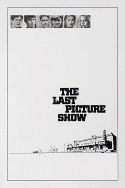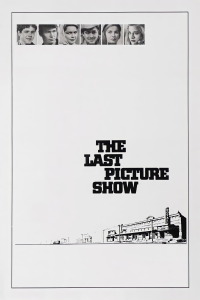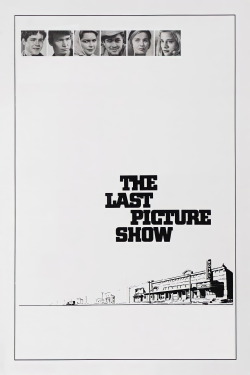
Review of The Last Picture Show (1971) by Diego C — 17 Feb 2011
The inhabitants in the small Texas town of Anarene find it hard to express themselves in their emotionally barren environment. Peter Bogdanovich is able to overcome this challenge through Point of View (POV) shooting, which allows the audience to connect more intimately with the character's inner feelings. By studying these shots we inherently compare and contrast relationships between the characters, deepening our connection to the plot.
They enable the audience to establish a closer relationship with certain characters. In effect, providing them with a more intimate experience then the plain dialogue would allow. The Last Picture Show opens with a long-shot pan that establishes the dead, desolate environment of Anarene. However, by incorporating a POV shot from the beginning, Bogdanovich places the audience in Sonny Crawford's shoes as he tries to keep his truck from breaking down. We are pulled into his gentle life, hanging around the snooker bar, working for the oil company, and necking in the back of the theater.
Bogdanovich is also able to introduce us to characters using POV, establishing relationships that evolve throughout the movie. Jacy makes her first appearance, as we would see her through Sonny's view: soft, with sparkling eyes, as Duane kisses her. The director conveys feelings of attraction as the audience and Sonny fall in love with Jacy. The POV shot foretells the feelings Sonny has for Jacy later in the film.
Later, when Sonny takes Ruth to the doctor, he goes inside for a soda. Again we see her crying across the table through Sonny's eyes. This POV shot serves two purposes. First, the audience gets a better sense of the scene. The way Ruth looks at Sonny and the audience indicates her feelings of intense pain and loneliness. Second, the audience starts a comparison process between Ruth and Jacy, because the director uses similar shots to introduce both characters.
In fact, throughout the movie POV shots facilitate the comprehension of this comparison. Usually Bogdanovich utilizes the POV shot in unconventional moments that occur in the character's lives. Ruth does not have very many POV shots, and when we are focused on her she is usually crying. Jacy has multiple POV shots, mostly during her sexual experiments. This reinforces our conception of Jacy as a young and outgoing girl as opposed to Ruth's more mature life. Mostly what we know about Ruth is shown through Sonny's eyes, reinforcing an awkward, yet tender relationship.
Through dialogue alone the audience could not understand the subtle emotions within the people of Anarene. The POV shot expertly places viewers in the town. The nature of the` subjective realism allows us to feel the heartbreak, loneliness, guilt, and pain that words could not describe. Just as abruptly as we are pushed into Sonny's shoes at the beginning, the parallel reverse pan shot pulls us out, leaving us with an intimate slice of Texas life.
All in all I didn't know what to expect coming into this movie. I was blown away. Sensitive, moving and funny, it's a definite must see.
This review of The Last Picture Show (1971) was written by Diego C on 17 Feb 2011.
The Last Picture Show has generally received very positive reviews.
Was this review helpful?