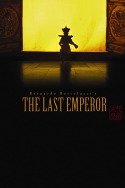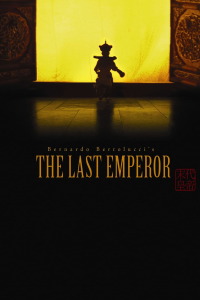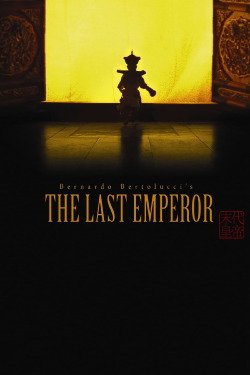
Review of The Last Emperor (1987) by Byron B — 05 Jul 2009
First, let me recommend the Director's Cut though it is 3 hours and 20 minutes. There is so much historical and political content that I found a second viewing helpful too. The costumes, sets, cinematography, and music are all sumptuous.
The movie covers almost 60 years of Chinese history from the perspective of one person. The last emperor, Pu Yi, lived through so much history during the first half of the 20th century. I don't know how much of the story is completely historically accurate, but the changes of the decades and major historical events seem to be presented authentically. The story reminded me at certain points of the movie and book, The Good Earth. While that story shows some of the cultural changes in Chinese history from the perspective of peasants out in the fields, this story is told mainly from within the walls of the Forbidden City or the walls of a Communist re-education camp. There is a strong imprisonment theme! The story is told in flashbacks, and I thought this device was well crafted with interesting parallels.
Pu Yi's life is incredibly tragic and yet I found all the drama enthralling. He becomes Emperor at 3 years old and so hasn't formed any ideas for himself. Even later in his life you can't really say that he ever gained much experience as a leader. Earlier in China's history this might have worked out better to have a leader start so young without much conflict, but with all the changes preparing to take place in the 20th century it is inevitable that Pu Yi would become a tragic figure. He becomes spoiled because every want and need is taken care of for him. He's a puppet controlled by many others through his life. Early in his life China becomes a Republic and he no longer has any real power, but traditions stay the same inside the Forbidden City. Just before WWI O'Toole arrives as a Western tutor and Pu Yi begins to learn about the modern world. Eventually he tries to reform the traditions of imperial China, but he still takes a wife and a consort (a second wife). China then becomes a Communist country and some people turn against the Manchurian part of northern China. Since Manchurian is the Emperor's heritage, he and his remaining staff are kicked out of the Forbidden City. He ends up being welcomed by Japan in the early 30's before WWII and they feed him some misinformation. At this point he still craves the power of being Emperor and there is a lot of political intrigue as Manchuria becomes independent (but, Japan is really pulling the strings). He has relationship issues with his wife and consort, one feeling like a third wheel in the more westernized Japan and the other becoming addicted to opium. After WWII the Communist powers in China change a bit and in 1950 we catch up to the "current" events where Pu Yi and all the other imperial supporters are being re-educated. Ying gives an impressive performance and human face to the "Governor" of the camp. It is an amazing, in depth, dramatic conflict from the American audience perspective when you realize that Pu Yi was working with the Japanese, one of the Axis powers of WWII, and the Communists are trying to turn him into a comrade. Between a rock and a hard place. There's a good portion of Americans that wouldn't see either side of this conflict as worth cheering for. But still I found it very engaging to watch John Lone portray the struggle.
One of my favorite quotes: The Governor- "You are responsible for what you do! All your life you thought you were better than everyone else. Now you think you're the worst of all!" There's also a quote about how all the new generals and changes in the communist regime are just like the battling war lords of tribal society. There's a sense that the differences between the old and young in society will lead to history repeating itself, and in fact power keeps on shifting but nothing in history really changes.
This review of The Last Emperor (1987) was written by Byron B on 05 Jul 2009.
The Last Emperor has generally received very positive reviews.
Was this review helpful?