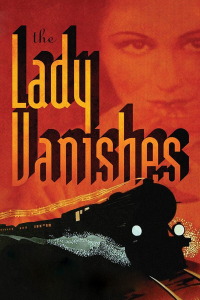
Review of The Lady Vanishes (1938) by Storytellershannon M — 26 Jun 2012
This 1938 movie is set in a fictional country which is reminiscent of the Balkans with a touch of Switzerland. It begins easily enough as a group of tourists are stuck at a lodge during an avalanche on the train tracks and finally get back on the train at a later point. During that time a lot of characters get introduced including an elderly British governess, who calls herself Miss Froy (May Whitty), who makes a connection with the main female character, Iris, played by Margaret Lockwood. In Britain at this time Lockwood was the top box office starlet. Supporting characters Caldicott and Charters (who remind me some of Laurel and Hardy) are two bumbling cricket buffs traveling about Europe who find themselves set amidst this great mystery yet attempting to not get involved at first. The set opens with them in a mundane matter and they continue along in the tale with some of the funny lines. Interestingly enough these two supporting actors, Margaret Lockwood and the writing team would go on to do another âphony warâ? film titled NIGHT TRAIN TO MUNICH with Caldicott and Charters on another trip to play cricket all over Europe.
At one moment the charming governess disappears and Iris tries to find out what is happening yet nobody can recall this woman (or chooses not to get involved for various reasons) so pretty soon the sanity of the main female character is being called upon by a Germanic doctor (Paul Lukas). A music man takes an interest in the matter (played by Michael Redgrave) but he's only humoring Iris and interested in her good looks (even though she talks of a fiance' who never shows up in the picture). Meanwhile, there are many subplots taking place on the train with supporting characters.
There's a lot of charm to this tale and you get the feeling that sometimes certain scenes are here to lay out the characters and the scenery and not so much move the plot along and other times you're just wrong. The plot is moving along while characters and setting are masterfully interwoven like a fine tapestry. Gunfighting isn't taken very seriously. People don't take cover and everybody is poking behind the shoulder of another with little concerns for the bullets during a gunfight. Don't they realize bullets can go through the walls near the window? I guess less audience people knew about guns so they didn't worry about it too much. The positioning for firing guns sometimes seemed off, too.
This movie is available for free download at the Internet Archives. I would imagine nobody continued the copyright. Liberally adapted by Sidney Gilliat and Frank Launder from Ethel Lina Whiteâ(TM)s novel The Wheel Spins which changed several key scenes. It was directed by Alfred Hitchcock but Hitchcock was not always around and it's claimed Sidney Gilliat and Frank Launder did some of the directing. The budget was limited so the train set was some ninety feet long. That's why many of the camera shots are tightly focused yet also give the feeling of imprisonment or even the walls closing in on everybody as the plot tightens.
Some say this film was an attack upon Britain for its isolationist policy while Europe suffered under the Third Reich. It's fairly obvious that the villains are Nazis or Nazi supporters. However you want to see it there's a definite youthful energy and sexual innocence that evokes a period shortly before WWII would take place and thereafter change Hitchcock's approach to films. For Hitchcock fans this is a must and for others it depends on the movie focuses. There would be a 1979 remake of this film with Angela Lansbury.
STORY/PLOTTING: B to B plus ; CHARACTERS/DIALOGUE: B plus to A minus; INTRIGUE/MYSTERY: B plus; CINEMATOGRAPHY: B plus; OVERALL GRADE: B plus; WHEN WATCHED: end of June 2012 (streamed);.
This review of The Lady Vanishes (1938) was written by Storytellershannon M on 26 Jun 2012.
The Lady Vanishes has generally received very positive reviews.
Was this review helpful?