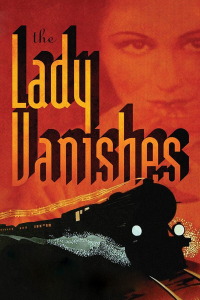
Review of The Lady Vanishes (1938) by Chris M — 26 Oct 2013
I ask you to imagine that you are getting ready to board a train the following day. In that time before you get on the train the next day, you make a new friend who will also be on the same train that you are going on. When you are boarding the train the next day, someone drops something on your head (whether it's accidental or intentional remains to be seen) and your new friend helps you get to your seat. Your train is now progressing to its destination and your friend is taking care of you for the beginning of your travel. They buy you a cup of tea to heal your headache and you share a conversation in which you learn more about each other. Then, you both go back to your seats and you take a nap. Now, imagine that after waking up from this nap, your friend does not appear to be in their seat.
You ask the other passengers nearby about the whereabouts of your friend. You describe what your friend looks like to them, that way they know who you are talking about. Not only do they claim that they have not seen them, but they also claim that they have never heard of such a person sitting there. You ask any person you can come across on the train who has seen this person when you were with them. They say the same thing as the people you've talked to earlier. You simply refuse to believe what they are saying, and insist that you indeed were accompanied by this person. No matter how hard you try, you cannot convince anyone that such a person was on the train. Are you just imagining things or is there something rather fishy going on in this train ride?
In the case of Iris Henderson (Margaret Lockwood), the main character of director Alfred Hitchcock's outstanding 1938 British comic thriller The Lady Vanishes, that is exactly the dilemma she is left to face. In her search for the whereabouts of an elderly former governess by the name of Miss Froy (Dame May Whitty), she is accompanied by a young musicologist named Gilbert (Michael Redgrave). She does not care for him at first due to his behavior the night before, but as he assists her in solving this case, that all changes of course. As these two get closer and closer to solving this mind-boggling disappearance, they discover that there is much more behind this disappearance than they expected.
Without giving anything away, there is a big plot development revealed later in the film that is very well built-up and very surprising both at the same time. High praise should be given to Hitchcock and screenwriters Sidney Gilliat and Frank Launder for the film's masterful storytelling and pacing. I really admire how they let the story play out as naturally as it did since they made it feel like everything is unfolding right before our eyes. As a result, the film never feels predictable or contrived so much as it feels realistic and full of surprises around the corner. In able for a relatively simple story such as this to still hold up well decades after its original release, it should be able to retain an execution similar to what Hitchcock does here with The Lady Vanishes.
But as terrific as Alfred Hitchcock's direction is, credit must also go to screenwriters Gilliat and Launder for giving Hitchcock a worthy screenplay to work with. I am very enthusiastic over how they wrote and set up the story, so that it could have been possible that Iris was imagining this person the whole time. It just makes Iris all the more sympathetic with her peculiar dilemma and gives each of these other characters a mysterious quality to them. Credit must also go to the main actors of the picture including Lockwood, Redgrave, Whitty, and Paul Lukas as a brain surgeon who proposes that our main character could be under hallucination. The actors incorporate enough charm and intelligence into their characters that they become more than plot devices used to progress the story, they feel like real people.
It had been said that The Lady Vanishes was the film that convinced David O. Selznick, renowned producer of Gone With the Wind (1939), that Alfred Hitchcock had a future in making films in Hollywood and it is safe to say that he was right. After this film became a huge success in Britain where it first premiered, Hitchcock would eventually move to America to work on his first American film, Rebecca (1940), and eventually bring us classics like Rear Window (1954) and Vertigo (1958). In a way, The Lady Vanishes is arguably Hitchcock's first real classic that he ever directed. So any hardcore fans of Alfred Hitchcock's work owe it to themselves to see The Lady Vanishes as soon as possible, if they haven't already.
This review of The Lady Vanishes (1938) was written by Chris M on 26 Oct 2013.
The Lady Vanishes has generally received very positive reviews.
Was this review helpful?