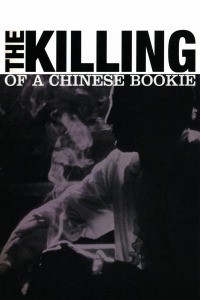
Review of The Killing of a Chinese Bookie (1976) by Blake P — 06 Jan 2015
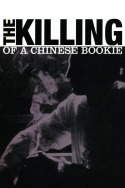
"The Killing of a Chinese Bookie" may be called "The Killing of a Chinese Bookie," but it's less about killing a Chinese bookie and more about the seedy underworld of crime as a whole. As one of cinemas most challenging directors, John Cassavetes would rather binge on vomit-inducing cinematography (his second wife is the close-up shot) and improvised dialogue instead of gripping conformity, but his ability to break the mold of modern filmmaking has kept his electrifying style more thrilling than ever. "The Killing of a Chinese Bookie" is his most self-indulgent film - the nightclub scenes sometimes drag on and on and on and on, and the dialogue is oftentimes more rambly than it is meaningful - but the experience is unlike any film of the 1970s era, or now, for that matter.
Cosmo Vitelli (Ben Gazzara), the owner of a trashy strip joint, has a golden smile and a silver fox ineptitude in pocket, but underneath his silken shirts and confident attitude lies some serious debt to the mob. After losing $20,000 at a gambling match, he is offered a chance at redemption: If he murders Chinese bookie, he'll once again be able to exclaim a city accented "forgedaboudid!" and truly mean it. Problem is, is that the Chinese bookie is not actually a Chinese bookie but a boss, and the mobsters, in actuality, don't expect Cosmo to survive the takedown. Yet he does.
Cassavetes has covered domestic troubles, middle-of-the-road-romance, show business, and mid-life crises - but those sub-genres fit together nicely in their aesthetics, sitting hand-in-hand in a ring-around-the-roses fit with Cassavetes in the middle. "The Killing of a Chinese Bookie" is his one and only crime film, and he's a natural. Other movies of the era, like "Dirty Harry" or even "Sleuth," tended to romanticize crime, make it a game rather than a lifestyle with serious consequences. Cassavetes' lack of star power, flash or, to make a long story short, any Hollywood norms, makes it as if the blood dripping from bullet wounds is plopping directly onto our forehead.
In last year's "Birdman," Lindsay Duncan portrayed a theatre critic who praised Riggan Thomson's (Michael Keaton) stage production for its "hyperrealism": at the end of his take on "What We Talk About When We Talk About Love," he shoots himself in the nose, for effect, of course. Cassavetes may not force any of his actors to blast their noses off to ultimately make himself look better, but any of his films, particularly "The Killing of a Chinese Bookie," are as close to hyperrealism as a director can get without nearly murdering anyone. Many filmmakers believe that if you put a low quality camera to use and swerve it around with handheld charm, then no-holds-barred grit will come to light. John Cassavetes does that, but it's only one part of his originality. Because his films lack a cemented script and a big-budget, they're able to explore their options. He never made a film that wasn't spontaneous in its delivery.
"The Killing of a Chinese Bookie," is described as a crime movie, but when I think of a crime movie, I don't think of something like this. The crime genre has always evoked an inexplicable fire inside me, as they always seem to contain a sort of wayward enthusiasm for action and tough-talk. There's an instantaneous thrill that lets itself loose. But "The Killing of a Chinese Bookie" is so unforced that it's as if Cassavetes was walking down the streets of 1976 Los Angeles, saw the strip club Gazzara's character owns, and decided to make a movie about the people whose lives are intermixed with that dirty culture. When all the sleazy crime stuff comes along, it's more oh shit! than it is tailor made to be a downturn that makes its way into a climax.
"The Killing of a Chinese Bookie," isn't as perfect in its flaws as so many of Cassavetes' other films are, but it has a spirit unlike anything to ever hit the mainstream, let alone indie cinema. Gazzara has never given such a restrained, utterly sympathetic performance, and that's a compliment of the highest common denominator - it's hard to like dirtbags, after all.
This review of The Killing of a Chinese Bookie (1976) was written by Blake P on 06 Jan 2015.
The Killing of a Chinese Bookie has generally received positive reviews.
Was this review helpful?