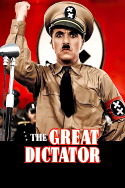
Review of The Great Dictator (1940) by Spencer S — 03 Apr 2013
When watching this film, the first talkie from mega talented filmmaker Charlie Chaplin, it's all so visceral. Your response, neither weathered by time nor the shame of what was happening at that point in time, is primal.
Chaplin here is fusing his talents of comedic slapstick and international propaganda so seamlessly, that you can't distinguish the two, and in the midst of those elements is also a flawless interpretation of human suffering and degradation, laced with hope.
This film, from the king of silent comedic films, made his coup de grace at this time, unequalled in his commentary of the Nazi Party, because at the time of production it was unpopular to mince words when you were speaking about the Germans.
At the time of release however this was a pivotal motivator for all countries, and still stands as a great form of propaganda and art. Where does the humor towards a dictatorship come from, you ask? Well, Chaplin saw the similarities between himself and Hitler, not just in mustaches but in upbringings.
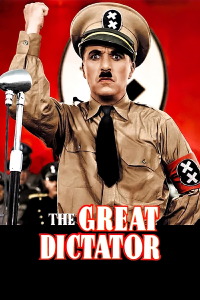
Using his off-brand form of humor he floats through scenes as The Tramp (though now labeled as The Barber), upends the government, makes friends with a traitorous former colleague, and has to grasp to understand the evils of the party in power.
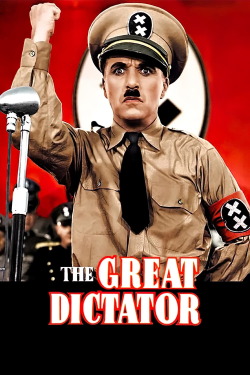
The dictator uses anti-Semitism for political gain, giving speeches that sound furious and biting, though in reality none of its in proper German (true to Chaplin's sense of humor). While the Barber is an enlightened, strong-willed, and clumsy Jew on the verge of romance with another in the ghetto, Chaplin also portrays the dictator named Hynckel, who is in direct control of the fake country of Tomania.
The differences between the two performances are astounding, not just because one is filled with light humor and the other with cloying hatred. Hynckel is savage in his opinion of Jews while not caring about their fate, tries to take over Europe without much thought, treats women as objects, and lives an opulent lifestyle.
Some of the scenes truly show the deranged political power of Hynckel while masking any resemblance to Chaplin's adopted tramp. The facts of the Nazis' true terror had not fully come into the public sphere, but many people did know about these horrors.
Chaplin denies any knowledge of the realities of the camps and wouldn't have made light of them had he known, though this fact is debated. Either way, what is shown onscreen seems to be of the right atmosphere and a little easier to digest now that it's been seventy odd years.
The film balances between sincere odes to intervention and humane love for one another and full out comedy, including an inspired dance between Hynkel and Hitler's famed globe, in balloon form of course.
If you know anything about this film already, it's the ending speech that remains famous. Though I didn't know anything of it prior to watching, it was miraculous, inventive, beautiful, and something else altogether, and can be observed as much no matter what.
This film is lovely from all angles, so good it's miraculous, and belies its own reputation, simply creating beauty onscreen.
This review of The Great Dictator (1940) was written by Spencer S on 03 Apr 2013.
The Great Dictator has generally received very positive reviews.
Was this review helpful?