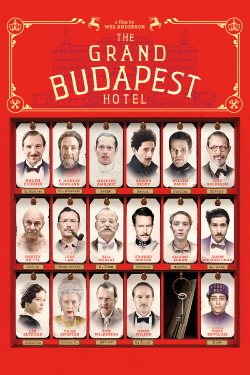
Review of The Grand Budapest Hotel (2014) by Dirigiblepulp — 11 May 2014
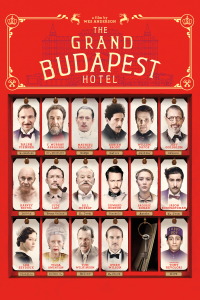
Wonderful and delightful and funny and inspired. Made with Wes Anderson's normal fastidious attention to detail, with careful compositions and eccentrically droll characters (with the exception of the inspired M. Gustave played by Ralph Fiennes, a mannered sophisticate with just the right amount of rapscallion that instead of quirky tics, he's a man of desires and decency, an almost real human being).
The Grand Budapest Hotel operates on a more plot-centric level than any of Anderson's previous films, and yet retains all his charms and idiosyncrasies, yet by not flaunting his mannerisms as character development or deepness of thought, he actually winds up saying more about everyone and everything by letting them speak for themselves. The melancholy passing of the old world is captured in the sheer joy and exuberance of the scenes taking place there, so that when we are lurched back to the present and the film slows down and hits the notes of normal Anderson faire, it carries with it a sense of loss and sorrow.
The juxtaposition of the looming war, with its brutality and chaos, also inspires the scenes in the past as they are full of atypical for Anderson indecency. From the dropping of F-bombs to the explicit, yet not grotesque, gore. These seeming anachronisms, that work on two different levels, are both funny and deep and since they don't just have to be deep they actually work perfectly.
The movie plays out in three different aspect ratios, a fun little treat for cinema fans who notice. Although it should be said that the majority of the film takes place in the past and as such uses a near full screen ratio (a relic of old European films), which is a little disappointing considering how gorgeous the filmmaking is. It could have been bigger and better.
This review of The Grand Budapest Hotel (2014) was written by Dirigiblepulp on 11 May 2014.
The Grand Budapest Hotel has generally received very positive reviews.
Was this review helpful?