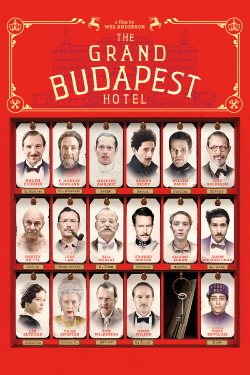
Review of The Grand Budapest Hotel (2014) by Jake C — 27 Feb 2018
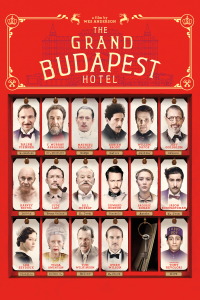
The Grand Budapest Hotel (Wes Anderson, 2014) is a modern day auteur film. Themes that are evident in most of Wes Anderson's canon are present in his latest film. However in this film Mr. Anderson truly brings to bear all the various tools of modern filmmaking. Editing (speeding up the FPS), aspect ratios, miniatures & scale models, set design, CGI, wardrobe, voice over, narrative structure, and score are all utilized with expert craftsmanship.
Different and out of place accents don't interrupt your suspension of disbelief. The Grand Budapest Hotel (Wes Anderson, 2014) in many ways is a fairy tale that takes place in a heightened world that satirizes both pre and post World War II Europe. Some characters who were clearly not American speak with American accents. Yet it doesn't break the suspension of disbelief and it still feels cohesive and maintain the characters believably that inhabit this slightly off kilter world.
A young man who is in many ways more mature and or capable then his father figure is a trope in much of Wes Anderson's canon. The Grand Budapest Hotel (Wes Anderson, 2014) is no different. Ideas and themes that are evident in Anderson's debut film Rushmore (Wes Anderson, 1998) are still present and being elaborated on in his most recent film. The relationship between a neophyte and his father figure is not yet stale despite it being present in most of Anderson's work. This is perhaps due to the casting of Ralph Fiennes and Tony Revolori in the roles that would typically be inhabited by Bill Murray and Jason Schwartzman. Similar to Woody Allen's casting decisions in his recent films a fresh face can revitalize a character type that we have grown accustom to.
This fairy Tale takes place in fake eastern European nations and fake Middle Eastern nations are named. Despite the fake names they sound eerily real. The fake but real sounding names give a sense of era and location without being overly specific. Pre WWII e & pre communist Europe help depict the dying days of Aristocratic old money Europe. The elements of the story that take place in mid 80's communist Eastern Europe provides a juxtaposition to the era that the primary narrative takes place. The shifting of eras is one of the ways Anderson plays with narrative structure. Because of the expert art direction and set design one is never confused as to what era they are viewing.
The Grand Budapest Hotel (Wes Anderson, 2014) is whimsical, epic, and sometimes downright laugh out loud funny tale. Wes Anderson has the uncanny ability to take absurd elements of a heightened world and make the people who inhabit it utterly believable and relatable. Wes Anderson is one of the few modern day filmmakers I'm comfortable calling an auteur.
This review of The Grand Budapest Hotel (2014) was written by Jake C on 27 Feb 2018.
The Grand Budapest Hotel has generally received very positive reviews.
Was this review helpful?