Review of The Glass Castle (2017) by Trevorsview — 10 Aug 2017
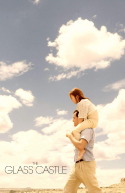
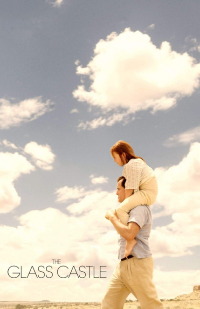
We usually prefer to think of ourselves as better off without our family, taking on trials by ourselves. The 2005 memoir by Jeannette Walls proves to us otherwise: we need our family more than we can ever realize, no matter what turmoil they may put us through. While The Glass Castle certainly means well in execution, this literary adaptation still pales in comparison to the book.
Director Destin Daniel Cretton wrote the script, along with Andrew Lanham, both relatively new to the art of screenwriting. However the blame for the feature’s weak service to Jeannette lands more on the imbalanced editing by the Oscar-nominated Moonlight editor Nat Sanders. He made little clarity as to where or when you were in time, the only indicator being the actress playing the main character. Even then, by the third act, hardly anything useful tells you when you are in time, as the makeup artists did nothing to let you know of anybody’s age. So consequently, it became harder to connect with Jeannette in her adult years. Obviously, the time-jumping narrative structure here worked a lot more fluidly on paper.
Director Cretton did little to communicate the book’s intention with the lack of screen control, resorting for the most part on a rarely focused Steadicam. The post production process also looked a little too rushed, with little contrast in the inconsistent color grading.
His casting decision for the lead in particular deserves some serious questioning, because frankly, Brie Larson (Trainwrecked, Room) contradicts Jeannette Walls’ true hair color or skin tone. Believe me, at the end credits, you get to see real home videos of the real family, and Cretton ought to lose credibility for ignoring the detail of appearance. The reasoning behind his casting here seems more to do with Brie’s rising status as an A-list celebrity with a rocking body and normal everyday face. Although, it could have been worse, Jennifer Lawrence, who looks even less like Jeannette Walls, almost took the part instead.
Yet amongst the beautified celebrity sickness, it still communicates the hard truth about honoring our own family members, even the dysfunctional ones. The whole cast works to their greatest effort to prove love’s complex nature, in a trial of finding the beauty in the struggle. Some research proves that “The Glass Castle movie is actually more accurate than the book,” (Bustle) and in film, the extra explored possibilities unravel one alcoholic father’s dangerous self-fear.
Consistently in Jeannette’s point of view, we watch her lifelong hunt after the demons in her life as she basically had to raise herself and her three siblings as they live from their suitcases. At a young age, she burned herself while cooking lunch because her mother cared more about her oil painting. Her father lead her in forced swimming lessons by throwing her into the water, literally drowning her. Then he attacked the swimming pool manager after the lesson nearly killed her, leading to the family running off into the wilderness to live.
She wanted nothing more than her abusive father to stop drinking, but she still loyally stitched his wounds and stargazed with him until she became old enough to question why. Yes, the ups and downs she shared with her father come off strong, and his intentions, even if dangerous, always seemed good in his perspective for his little “mountain goat” (the nickname he gave her). He taught her an important philosophy she unconsciously kept throughout her life: “you learn from living, all else is a damn lie.”.
So with each dusty landscape, with each blanketing snowfall, with each new painting covering up the family’s trash heap of a home, with each stick of butter mixed with sugar, with each traumatizing episode with the father’s mother, you sweat in dizzying fury as you watch the difficulties the father put his family through, until the outcome at last gives you some hope. The feminism here also meets common ground—while the women here need no man to obtain completeness, one can still make her a more well-rounded individual, just like in real life.
Once the credits roll after the turmoil, the proper morals spark your lightbulb: whether run by drunks or supported by loving saints, your family stays your family, no matter what happens. We each need one another, because we can never achieve perfection on our own. Whoever read the book should be satisfied with the recreated feel of the reading experience. I don’t think I can recommend it to anyone else unfamiliar with the book, better cinematic family dramas deserve your time, such as the recent Captain Fantastic, which communicate the hard truth in a more impactful way. So long story short, Walls’ intent of The Glass Castle remains unscathed: forgiveness helps you just as much as it helps your debtor.
This review of The Glass Castle (2017) was written by Trevorsview on 10 Aug 2017.
The Glass Castle has generally received positive reviews.
Was this review helpful?