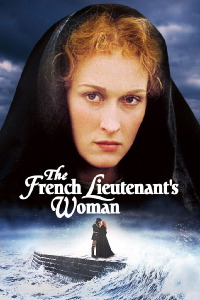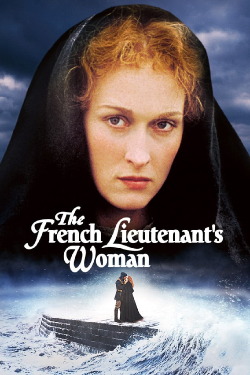
Review of The French Lieutenant's Woman (1981) by Cory T — 09 Jul 2008
The novel upon which this film is adapted is said to be a labyrinth of surprises for the reader, but that it was unfilmable. I believe that no written work is unfilmable, it just requires a talented vision and actors to make it successful. Both Meryl Streep and Jeremy Irons are timeless actors, capable of carrying literally any film. In 1981, though, they were both still emerging, if you will, and were not as highly regarded as now. I mention this point because I wonder if I would have felt differently about the characters and the film's outcome, had I not known so much of the stars. The answer is no, I guess, but it is an interesting point to consider.
The French lieutenant's woman is one literary representation of a woman that defied the restraints of her social orders, not always successful, but always passionate. Madame Bovary was another. Also, in her own way, Virginia Woolf channeled this through some of her characters.
This woman, however, is more mysterious and seemingly untouchable than the others; she is the Hester Pryne of the Victorian age, seen only as a whore by everyone she encounters.
I've decided, it isn't what Meryl Streep does on screen, but the way she does it. I was watching her monologue in this film- a very well shot scene- where she explains her story to Charles about who the French lieutenant really was. She talks for a good four-five minutes, but she never does anything extraordinary. I realized, then, that she is able to do the simplest things- such as explain a story- but completely enthralls herself into the character. Her timelessness is due to her simple yet wonderful talent to inhabit another persona. Also, it is she who changes throughout the film, comparing the two overlapping stories. Not only her accent, but her character, her emotions. Jeremy Irons' Charles and Mike remain fairly consistent in presentation and nuance.
The structure of this film- overlapping itself with theme, interconnecting the actors playing the characters that align with their modern-day situation- is truly the reason the film works as well as it does. Anna and Mike are having an affair while shooting this picture, but the reasoning behind it seems much deeper than that. At least for the audience. At least for me.
Do we even blink when we hear of people having affairs now? Doubtful, unless it is someone in direct connection with us. The juxtaposition, then, between the modern-day actors and the Victorian characters they are playing provide this film with a richness and enchanting study into societal acceptance.
This review of The French Lieutenant's Woman (1981) was written by Cory T on 09 Jul 2008.
The French Lieutenant's Woman has generally received positive reviews.
Was this review helpful?