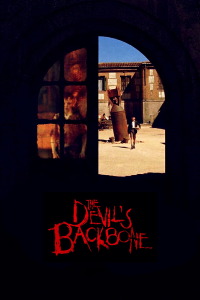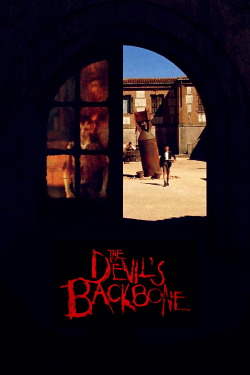
Review of The Devil's Backbone (2001) by Spangle — 27 Dec 2016
Set in a Spanish orphanage with the backdrop of the Spanish Civil War, The Devil's Backbone is very much a Guillermo del Toro film. Combining the destruction of innocence as a result of violence and abandonment with a political allegory regarding the Civil War, del Toro knows how to make a film. Billed as a horror film, The Devil's Backbone takes yet another page of the del Toro playbook by using a creepy atmosphere and elements of horror (such as ghosts) to tell a story that is not intended to scare you. Akin to later works such as Pan's Labyrinth, Crimson Peak, or The Orphange (which he produced), The Devil's Backbone explores larger topics through the use of this atmosphere and things often used in horror films. Here, del Toro comments on the Spanish Civil War. With strict and cruel leaders in charge, the abandoned children are on their own with limited movement and food. Yet, they are able to use their numbers, determination, and minds to overcome their oppressors.
With a creepy atmosphere, del Toro is able to create a film that plays on childish fears and misunderstandings. Largely told through Carlos (Fernando Tielve), a newly orphaned child, the film features a childlike sense of wonder and confusion at his newfound living situation. This confusion leads to fear and incredible tension that the film is able to utilize in introducing its ghost. With a good build-up with multiple bumps in the night, the film's horror elements work well, even if the film itself is never overtly scary. Had this not been a del Toro film, I would have been on pins and needles expecting a malevolent being to be haunting this orphanage. This is certainly a credit to him and the atmosphere he is able to conjure up in this film. The ghost itself has great special effects and looks the part. He adds a mystery element to this film as you begin to wonder how he came to be, but as it typical for del Toro, the explanation involves a great atrocity that had gone under-the-radar and been forgotten.
Politically, The Devil's Backbone finds its greatest success. Creating a parallel between the struggles of the orphans and the pains of the Spaniards under Franco, the film highlights the authoritarian nature of Franco through the oppression of the children. Abandoned and left to fend for themselves, Jacinto (Eduardo Noriega) is an intimidating figure of the children. Having injured Carlos and willing to commit atrocities in the name of gold, Jacinto is a man who was once an orphan, but has become a truly evil man. Representing Franco while the kids represent the Spaniards, del Toro shows how the country came together and, even if they were weaker and smaller, used their camaraderie and numbers to overcome their oppressor. In this way, The Devil's Backbone transcends the horror genre and instead becomes a piece of political commentary and represents del Toro's fantastical view of the Spanish Civil War through the eyes of children. In a way, this introduces themes and ideas he later revisited in Pan's Labyrinth, which I believe to be a stronger film. However, as a companion piece, The Devil's Backbone is undeniably powerful and yet another great work by del Toro.
Acting-wise, the film is impressive. For so many child actors, the acting is The Devil's Backbone is of an incredibly high quality. The entirety of the cast nails their respective roles and the kids bring an incredible authenticity to their roles. At all times, you believe they are going through this situation and are forced to deal with the agony of the terror surrounding them. They are able to approach the situation with the innocence and sense of imagination of a child, creating methods of coping that obscure what is actually occurring (the comics). However, in saying that, watching their innocence be shattered by the peril they face is tragic and thoroughly impactful.
Not really a horror film, The Devil's Backbone is more a fantastical exploration of the Spanish Civil War through political allegory and the eyes of children. A tragic and often hard to watch film, The Devil's Backbone shows the destruction of innocence at the hands of tyranny and the violence needed to overcome that authority. Powerful, poignant, and atmospheric, The Devil's Backbone once again demonstrates that nobody does child-like wonder blended with violence like Guillermo del Toro.
This review of The Devil's Backbone (2001) was written by Spangle on 27 Dec 2016.
The Devil's Backbone has generally received very positive reviews.
Was this review helpful?