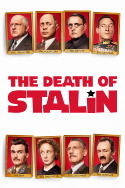
Review of The Death of Stalin (2017) by Stuart M — 22 Oct 2017
Whoever thought of turning the succession crisis instigated by the death of Stalin into a farce deserves to be given a medal and then taken out and shot; the latter, of course, being the mandatory fate of anyone who peers above the crowd in any way. It's an absolutely astoundingly funny film, even though you watch the bodies pile up and realize it really shouldn't be.
The basic facts of the film line up with what I remember reading about the end of Stalin's regime. What's changed is that the characters inhabiting the space have been turned into caricatures, bringing the absurdity of the situation to the fore and scoring big laughs off the cravenness, greed, and desperation of the committee members. There is no real lead, although Beria is the chief driving force for most of the film. He's played as the utterly loathsome man that he was, and he's probably the least comedic of the characters. It's hard to make his cruelty and lust anything but vile, so they mostly use him for any jokes involving a complete callous disregard for life. Better still, they pair him up with Jeffrey Tambour's Malenkov, who's nominally in charge now that Stalin's dead but hasn't a clue what to do. He's one of the more sympathetic of the bunch as, while he's vain and stupid and indecisive, he genuinely doesn't like playing murderous politics. He just wants to be important. He's the most overtly comic character as his confused bumblings and efforts to maintain respect often intensify the absurdity of the situation.
Also vaguely sympathetic is Steve Buscemi's Khrushchev. Out of a bad bunch he genuinely is probably the best man they have to run the state. While they do poke some fun at his pretensions to being a great reformer, generally the humor with him comes from his straight man in over his head routine, and his efforts to maintain his dignity while maneuvering to oust Beria. While by the end he's shown he can be just as ruthless as the rest of them, you still kinda feel sorry for the guy.
Most of the rest of the committee are just names. The only real exception is Molotov. Man, he's a riot. At first I couldn't see why they hired the great Michael Palin to play what was basically a dramatic role as an eternally serious and loyal party man. Then the plotting begins and his eyes just light up with glee as he joins in the purge. As he says, "Stalin would be loving this." The other characters are all outside the committee. Most are minor, such as the doctors rounded up off the streets since all the good doctors have already been executed. The director of Radio Moscow is a similar example, although he's the main window into the madness during the opening of the film when Stalin requests a nonexistent recording of the night's performance and they have to rush the audience back in and do it all again to keep him happy. More permanent are Stalin's children. His daughter's there for the committee members to alternately woo and offer protection, while the son's there to throw a spanner in the works of any plan that gets formulated through his childish instability. The last memorable role is Jason Isaacs as Marshall Zhukov. He's a lot of fun. No nonsense and instinctively violent, he's probably the only truly competent figure there. Aside from a certain vanity his main role is to puncture the ego balloons that everyone else carries around like a prize. His intensity is surprisingly funny.
The whole film is about the incompetence and selfishness of those in power, although unlike most such films this one is about brutal autocrats. Mostly the brutality is played for laughs, as in the scene where Beria describes the horrible things he wants his men to do to the first two men on the list but then hands the rest to the last man and says he can deal with them however he wants (it's funnier in context). But the film never loses sight of the horrors these men were complicit in, even as it laughs at the way they jump in fear at every whim of the tyrants. The brutal ending as the plotting comes to fruition is played as straight as can be and still seems harsh, even after all the laughs that led up to it. The rest of the film is funny and more than a little disturbing, especially in an age where absurd autocrats are making a return everywhere. They need to be taken down a notch and we need to remember both how absurd such posturing is and how dangerous pathetic little power-hungry men can be.
This review of The Death of Stalin (2017) was written by Stuart M on 22 Oct 2017.
The Death of Stalin has generally received very positive reviews.
Was this review helpful?