Review of The Conversation (1974) by Ryan M — 04 Jan 2010
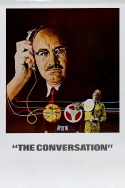
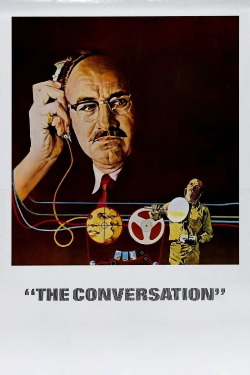
Francis Ford Coppola's other masterpiece of the 70's is arguably his best film (It's his favourite out of his own films). Released around the time of the Watergate scandal, it remains a powerful character study which may lack the stylish extravagance of Antonioni's "Blow Up", but contains more relevance in a time when privacy is exploited time and time again via technology.
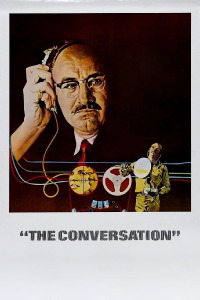
There's a couple in a crowded park in LA talking to each other on their lunch break, their synthesised voices jump in and out at various times making it hard for us to hear what they're saying. We see a long scope from a window aimed squarely at them, is someone trying to kill them? Nope, it's a new type of microphone recording their voices, sending the results down to a van with surveillance expert Harry Caul (A masterfully understated Gene Hackman who was inexplicably denied an Oscar nomination), requiring a perfect recording for a client, but coworker Stan (John Cazale) is more interested in what they're talking about.
Listening to the not-so-perfect recordings on tape, Harry believes he's heard something he doesn't want to hear: He rewinds the tape numerous times, Coppola flashes back to the scenes of the couple talking in the park, looping the voice recordings over the top to build Harry's thoughts up to us. After he's got the interference right, he hears the man say to the woman:
"He'd kill us if he got the chance".
This sets Harry off into a search for the truth behind these words; Why did his client want these two people recorded? Why is his clien't secretary Martin Stett (the excellent Harrison Ford) seemingly following him everywhere? Are these two people going to die just like the two innocent people in New York in a previous assignment?
Harry Caul is a complicated man, not even his woman fully understands him. Gene Hackman plays him as a reserved, sensitive loner with a guilt complex, Coppola taking his repressed Catholic guilt to paranoid into the mix to the point where the boundaries between reality and imagination in Harry's mind are blurred, all the way to its exceptional ending. Walter Murch's sound editing is fantastic, but Francis Ford Coppola's assured direction and magnificent screenplay turns the film from standard thriller into a fascinating character study which grows from later viewings into one of America's finest films from its most important period.
This review of The Conversation (1974) was written by Ryan M on 04 Jan 2010.
The Conversation has generally received very positive reviews.
Was this review helpful?