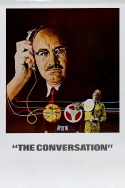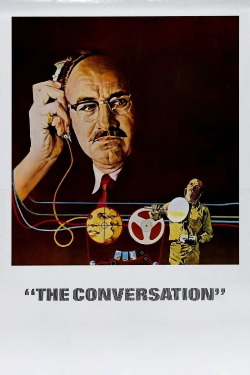
Review of The Conversation (1974) by Spangle — 19 Jul 2017
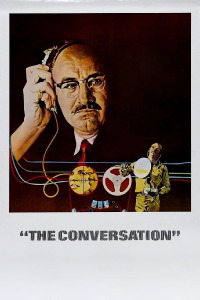
Right when it seemed as though Francis Ford Coppola had reached the pinnacle of the cinema world in 1972 with The Godfather, he decided to mess around and release two Best Picture nominees in 1974. Though The Conversation would lose to The Godfather Part II – honestly, I wonder if Coppola wanted one to win over the other or not – it has become revered as yet another classic from Coppola in the 1970s. Add in Apocalypse Now and it is clear why he is still revered a legend of the screen, even after releasing light hits and decided misses in the years since. A masterful mystery thriller, The Conversation was a bit of a diversion from The Godfather as a shorter film, but it is styled in very much the same fashion. Slow, character-driven, and building up slowly to its crescendo, Coppola’s The Conversation may not be quite on the level of The Godfather films, but with great sound, direction, acting, and a truly engrossing plot, The Conversation certainly holds its own among the towering triumphs achieved by Francis Ford Coppola in the 1970s.
Starring Gene Hackman as Harry Caul, The Conversation is a mystery thriller about a man who records a mysterious conversation. That man, Harry Caul, had been hired by a mysterious third-party (Robert Duvall), known only as “the director”, to record this call. With the help of his assistant Stan (John Cazale) and others, the conversation is recorded at great pain with the involved parties seemingly avoiding such an operation by walking in a loud open area and going in circles. As time goes on – and after some close encounters with the director’s assistant (Harrison Ford) – Harry begins to believe that this recording is something much more. Will these people be killed? Are they targets of some kind? Or are they plotting something? Trying to unmask the secrets of the scenario, armed only with his recording of this one-off conversation, Harry is driven to very brink of paranoia. In many ways, The Conversation often plays as a direct influence on later works such as Brian De Palma’s Blow Out or the 2006 German film The Lives of Others. With the protagonist being a largely innocent party who happens to record something of a very sordid nature, the film finds tension in initially framing the situation as one where Harry must protect those he recorded, out of fear that they will be harmed. However, clues along the way make it entirely possible he has it reversed. Or, is he just entirely paranoid and nobody is at risk? Smartly plotted, slow, and unwilling to explain everything, The Conversation is one of those films that seems to answer its questions and reveal the secrets behind its plot, but it only leads to further questions. It is a film that really sticks with you and refuses to let go due to its incredibly strong writing and the fantastic execution of its premise.
It is from this uncertainty that the film really plays up Harry’s paranoia. Slowly unraveling over the course of the film, it quickly becomes clear that Harry is not entirely mentally sound. Due to past regrets over having gotten people killed because of his recordings and his own paranoia about being recorded, Harry is a man ready to unravel at any point. With his new recording possibly leading somebody to die or be killed, his old regrets bubble back up to the surface and begin to wreak havoc on his mental health. Yet, where it makes the most profound impact is in his fear of being recorded. He knows the lengths that many will go to in order to record others and snoop on them. He also knows the damage a simple soundbite can create. Thus, he is desperate to avoid this with an intense alarm system in his home and absolute secrecy with his women. While a brilliant man in his field, it does not take a genius to realize that Harry is not all there. Brilliantly capturing this, Gene Hackman turns in a very nervy and on-edge performance where Harry is constantly appearing frazzled. On his face, there is a paranoid look of wonderment as to where “they” may be hiding to spy on him, even when he is alone. Nobody can be trusted in this world driven by paranoia with Hackman’s interpretation really nailing this feeling. Coppola’s use of music and camera movement also helps greatly in the film’s final scene. Showing Harry rip out his whole home after being confronted with an actual recording of himself, the scene is intense and frighteningly frantic. With a deeply unsettling backing track and a tight camera shot that spins around the room centered on Harry, the final moments of the film feel entirely claustrophobic. The ultimate culmination of all of his worrying regarding being followed or hurting others is confronting him and backing him into a mental corner that he may never escape. Intense and thrilling, this final scene is honestly quite horrifying and shows just how damaging paranoia, even when one has nothing to hide, can be to the human brain.
This review of The Conversation (1974) was written by Spangle on 19 Jul 2017.
The Conversation has generally received very positive reviews.
Was this review helpful?